TSHWANE'S E-HAILING REFORMS
By PJ MOCHE
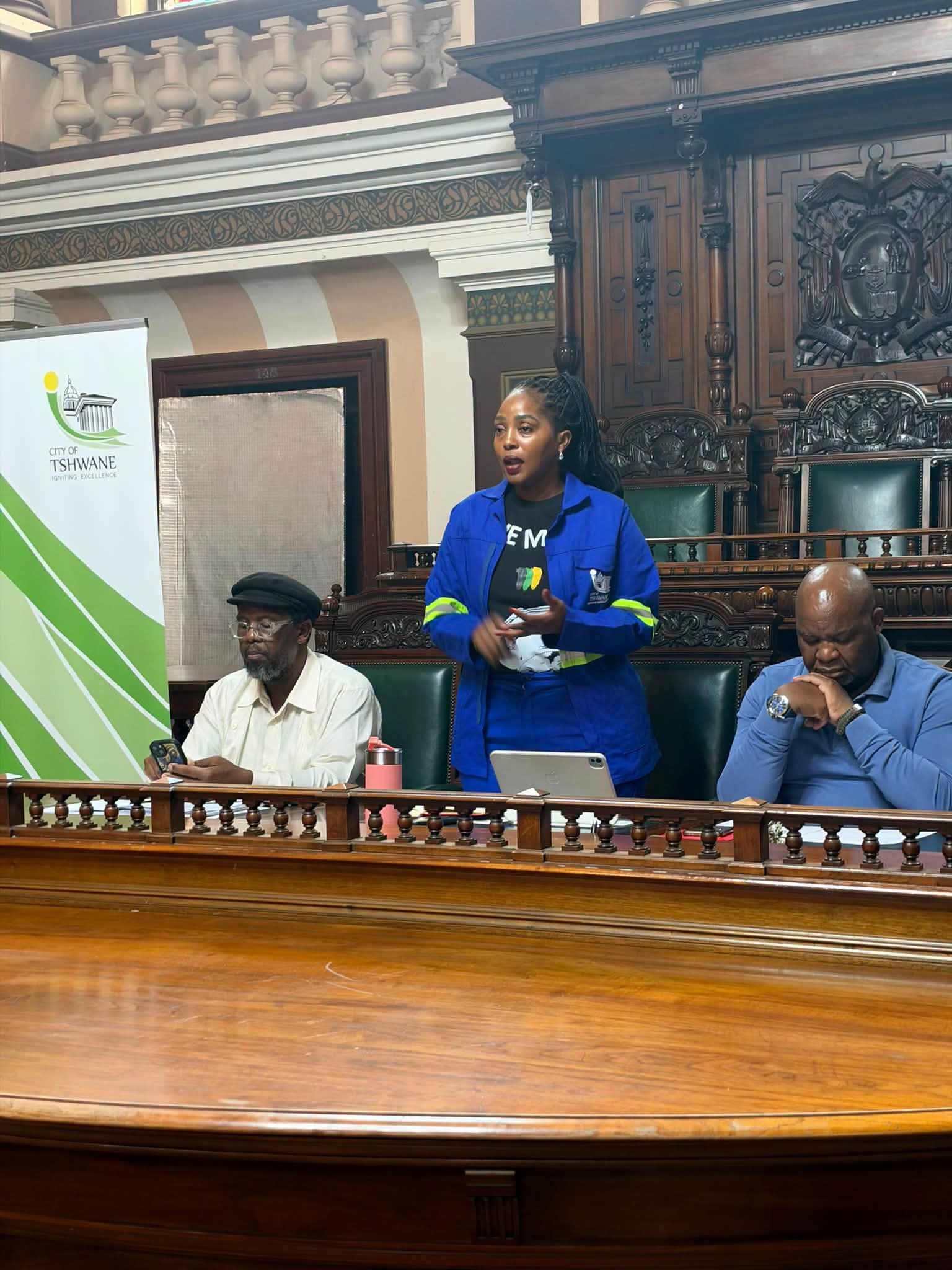
City of Tshwane MMC for Roads and Transport, Cllr Tlangi Mogale, has reflected on her tenure in the transport portfolio, highlighting interventions aimed at formalising the e-hailing industry, reducing operating licence backlogs and improving relations between e-hailing and metered taxi operators.
In a statement published on Tuesday, 3 November, Mogale said she had engaged with e-hailing and metered taxi operators during a feedback session to report on progress made under her leadership, discuss outstanding challenges and establish a way forward for the industry.
She described the formalisation and democratisation of the e-hailing sector as one of her biggest achievements, arguing that operators now have associations and recognised leadership structures through which they can engage government.
Mogale also pointed to improved relations between e-hailing and metered taxi operators, saying the City had worked towards creating greater harmony between the two sectors.
However, while celebrating these developments, the MMC acknowledged that several challenges affecting the industry remain unresolved.
The Municipal Regulatory Entity: An unfinished intervention
One of the most significant issues raised in Mogale's statement is the proposed establishment of a Municipal Regulatory Entity (MRE).
According to Mogale, Tshwane has advocated for the establishment of this entity, which would enable the municipality to play a greater regulatory role in the issuing of public transport operating permits rather than relying exclusively on provincial government.
She described the initiative as unique, claiming Tshwane is the only municipality in the country to have pursued such an arrangement.
However, she acknowledged that the entity has not yet been operationalised.
This leaves an important question about its practical status: What progress has been made towards establishing the entity, what legal and administrative requirements remain outstanding, and when can operators realistically expect it to become operational?
The distinction is important because advocating for a regulatory structure is not the same as establishing and implementing one.
Until the necessary arrangements are completed, operators will continue to depend on the existing regulatory framework.
Operating licence backlogs and enforcement
Mogale also cited progress in reducing the backlog of operating licence applications, an issue that has previously caused considerable tension between e-hailing operators and law enforcement authorities in Tshwane.
In December 2024, Mogale acknowledged that approximately 6,100 permit applications had been received, with only 2,500 resolved at the time, according to reporting by Pretoria News.
The backlog became particularly contentious when e-hailing vehicles were impounded for operating without valid permits, despite operators raising concerns about administrative delays beyond their control.
In February 2025, the issue escalated further when the Pretoria High Court interdicted the City from impounding vehicles belonging to affected e-hailing operators in the matter involving Wanatu and other operators.
The dispute exposed the difficulties created when enforcement requirements intersect with delays in the administrative licensing process.
Mogale now says progress has been made in reducing the backlog. However, her latest statement does not provide figures showing how many applications were outstanding when she assumed office, how many have since been processed, or how many remain unresolved .
Those figures are necessary to independently assess the extent of the claimed improvement.
Provincial government introduces digital licensing system
Another important development is the launch of the Gauteng Public Transport Regulatory Information System (GPTRIS) on 6 October 2026.
The system was officially launched in Tshwane by Gauteng Premier Panyaza Lesufi, Roads and Transport MEC Kedibone Diale-Tlabela and MMC Tlangi Mogale.
According to the Gauteng Department of Roads and Transport, GPTRIS is designed to modernise the processing and issuing of public transport operating licences through electronic applications, digital payments, standardised compliance checks and real-time application tracking.
The provincial department says the system is also intended to support the prescribed 60-day turnaround time for operating licence applications.
The development is significant because it addresses some of the administrative problems that have affected public transport operators, including e-hailing drivers.
It also raises an important question about how the proposed Tshwane Municipal Regulatory Entity will operate alongside the provincial licensing system and what additional regulatory powers the municipality intends to exercise.
Accountability of e-hailing platforms
Mogale further highlighted efforts to hold e-hailing application platforms and their owners accountable, arguing that platform owners should not shift their responsibilities entirely onto drivers.
This is an important aspect of the debate.
E-hailing drivers operate within a business model in which digital platforms connect them with passengers, while vehicle owners and drivers carry various operational responsibilities.
Effective regulation must therefore consider the responsibilities of all parties, including platform providers, vehicle owners, operators and drivers.
South Africa's 2025 National Land Transport Amendment framework and associated e-hailing regulations provide a broader regulatory framework for electronic-hailing services, including requirements for platform providers and operating licence compliance.
The question is whether enforcement and accountability mechanisms are being applied consistently across the industry.
What remains unfinished?
Mogale's statement is both a reflection on her work and an acknowledgement that the transport sector still faces significant challenges.
She said the department had established systems intended to continue beyond 2026 and contribute towards improving public transport in Tshwane.
However, the public still needs measurable evidence of these interventions.
Among the outstanding questions are:
When will the proposed Municipal Regulatory Entity become operational?
How many e-hailing operating licence applications remain outstanding?
What mechanisms are in place to monitor compliance by e-hailing platforms?
How will the City protect operators from administrative delays while maintaining lawful enforcement?
What concrete measures have been introduced to improve relations between e-hailing and metered taxi operators?
What systems and commitments will remain in place under future political and administrative leadership?
Mogale ended her statement by expressing gratitude to the different transport sectors with whom she had worked, saying she was leaving the department with valuable lessons, knowledge and established relationships.
For Tshwane's e-hailing industry, however, the real test will not be the number of engagements held or commitments announced, but whether those interventions translate into a more accessible, transparent and functional regulatory environment.
Capital Daily News will continue monitoring developments in Tshwane's public transport sector, particularly the implementation of the proposed Municipal Regulatory Entity and the resolution of outstanding operating licence challenges.
- #MUNICIPAL