By Capital Daily News | Investigative Desk
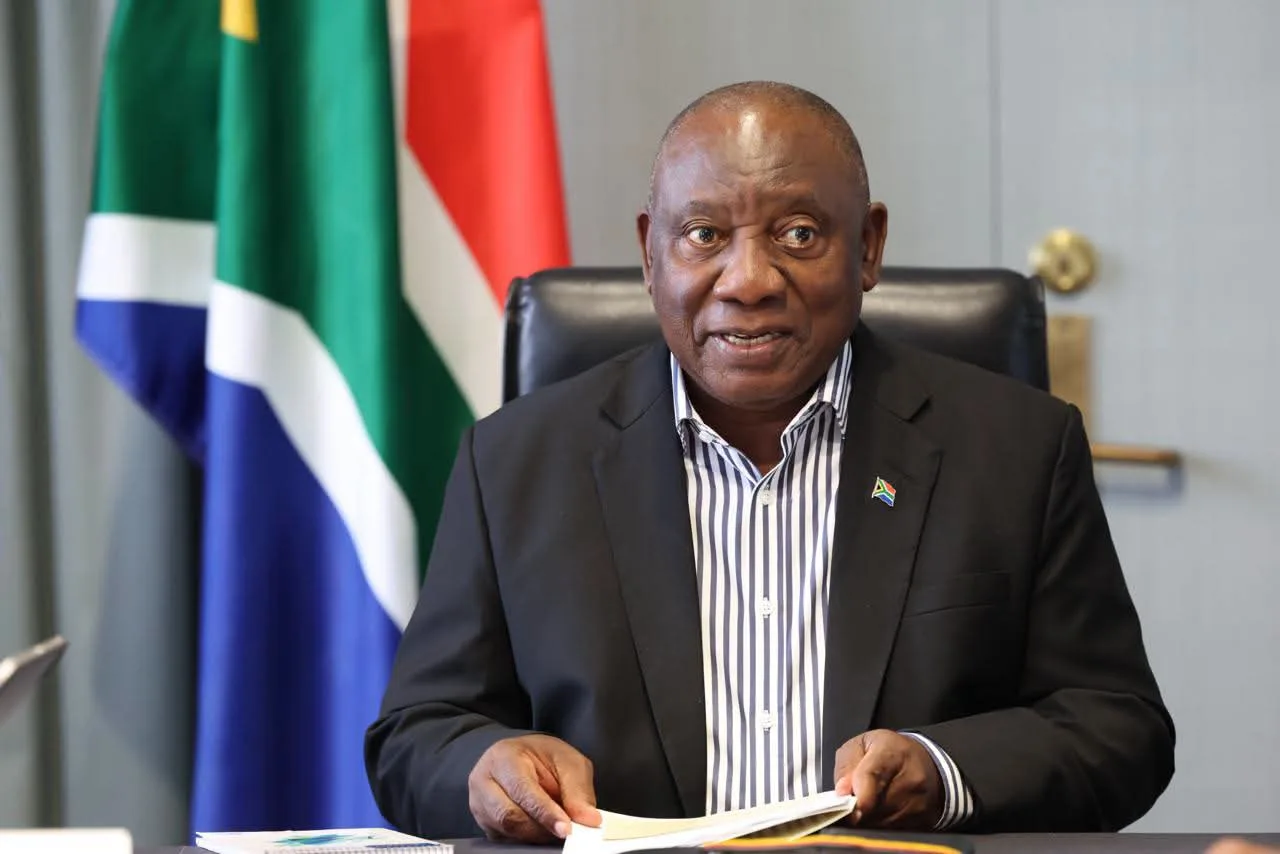
President Cyril Ramaphosa's working visit to Silicon Valley, California, comes at a particularly consequential moment for South Africa's domestic politics, international relations and economic policy.
Officially, the week-long engagement, running from 15 to 21 November 2026, is focused on artificial intelligence (AI), technological innovation, investment opportunities and strengthening South Africa's digital capabilities.
However, the timing of the visit raises broader questions that extend beyond artificial intelligence.
Just days before the President's departure, the United States announced its intention to withdraw South Africa from the African Growth and Opportunity Act (AGOA), effective 1 January 2027. Meanwhile, the ANC emerged from the 4 November local government elections with approximately 30.76% of the national vote, reflecting a substantial decline from its previous electoral performance.
Against this backdrop, Ramaphosa is leading a delegation that includes a DA Cabinet minister, senior government officials and representatives from business, academia and research institutions into one of the world's most influential technology ecosystems.
The central question is whether South Africa is simply pursuing technological investment, or whether the broader economic and diplomatic environment is also shaping what Pretoria is prepared to negotiate.
THE DELEGATION: A GNU GOVERNMENT, NOT AN ANC MISSION
One detail that deserves attention is the political composition of the delegation.
The President is accompanied by ministers responsible for Finance, International Relations and Cooperation, Science, Technology and Innovation, Trade, Industry and Competition, Communications and Digital Technologies, Electricity and Energy, Small Business Development and the Presidency.
Among them is Communications and Digital Technologies Minister Solly Malatsi, a senior Democratic Alliance politician and the party's Deputy Federal Chairperson.
His presence means that the delegation includes representation from one of the ANC's principal partners in the Government of National Unity (GNU).
This is particularly relevant because the Communications and Digital Technologies portfolio is central to several of the policy questions surrounding foreign technology companies, telecommunications licensing, digital infrastructure and transformation.
Malatsi has previously attracted considerable political attention over his proposed policy changes concerning Equity Equivalent Investment Programmes (EEIPs) in the information and communications technology sector.
His inclusion is therefore not merely a matter of political representation. It also places a minister directly responsible for an important regulatory environment within a delegation engaging global technology companies.
There is, however, no evidence that Malatsi is travelling under a separate DA negotiating mandate. He is participating as a Cabinet minister in an official presidential delegation.
AGOA: WASHINGTON'S DECISION CAME BEFORE THE ELECTIONS
The chronology is important.
On 2 November 2026, the United States Trade Representative announced that President Donald Trump had notified Congress and the South African government of his intention to terminate South Africa's participation in AGOA, effective 1 January 2027.
The American administration cited concerns relating to barriers to US trade and investment, corruption, and issues it considers threats to American national security and foreign policy interests.
The announcement provided 60 days' advance notice.
South Africa's Department of Trade, Industry and Competition subsequently acknowledged the decision and expressed concern about its implications for workers, exporters, businesses and communities dependent on AGOA-supported value chains.
The department also maintained that South Africa had already tabled additional concessions beyond those agreed in 2015, arguing that Washington was introducing new issues that had not formed part of the negotiations initiated in 2025.
The economic implications are worth examining.
According to the DTIC, South African exports under AGOA amounted to approximately US$1.7 billion in 2025, compared with US$4 billion in 2024.
Approximately 10% of South Africa's exports to the United States entered under AGOA in 2025, while 89% entered under ordinary World Trade Organisation most-favoured-nation terms.
AGOA therefore does not represent the entirety of South Africa's trade relationship with the United States. Nevertheless, its withdrawal could affect particular industries, businesses, investment decisions and employment.
The announcement came just two days before South Africans went to the polls.
On 4 November, the country held its local government elections. The ANC received approximately 30.76% of the national vote, while the DA secured 24.64%.
The Electoral Commission subsequently declared the elections free and fair on 8 November.
The ANC's result represented a substantial decline from its 45.59% national vote share in the 2021 local government elections.
The sequence is significant: Washington announced its intention to withdraw South Africa's AGOA benefits, South Africans voted, and Ramaphosa subsequently travelled to California.
There is no established evidence that the election outcome caused the timing of the Silicon Valley visit. The programme had been presented as part of the government's broader AI and investment agenda.
Nevertheless, the convergence of these developments creates a legitimate question about the economic and diplomatic environment in which the President is operating.
THE TRUMP FACTOR: HOW MUCH IS SOUTH AFRICA PREPARED TO NEGOTIATE?
The relationship between Pretoria and Washington has experienced considerable strain.
Trade disagreements, foreign policy differences and competing positions on international affairs have contributed to a difficult diplomatic environment.
The Trump administration's AGOA announcement adds an economic dimension to that relationship.
For South Africa, the challenge is balancing access to the American market with the country's domestic policy objectives, constitutional obligations and foreign policy independence.
The DTIC has maintained that South Africa remains committed to a balanced and mutually beneficial relationship with the United States while protecting its transformation objectives and national interests.
That position raises an important question: what does Washington consider sufficient progress, and what is Pretoria prepared to change?
The distinction between negotiating and conceding is essential.
A government can engage in trade negotiations, reconsider regulations and seek investment without necessarily surrendering its policy autonomy.
However, if market access or investment opportunities become conditional on changes to domestic policies, the public has a legitimate interest in understanding the nature and extent of those negotiations.
There is currently no publicly established agreement showing that Ramaphosa has committed to changing South Africa's foreign policy or transformation framework in exchange for American cooperation.
THE MUSK FACTOR: STARLINK AND SOUTH AFRICA'S EMPOWERMENT FRAMEWORK
Perhaps one of the most consequential domestic policy disputes involving American technology interests concerns Elon Musk's satellite internet company, Starlink.
The company has been seeking entry into the South African market, but its proposed operating structure has encountered regulatory challenges involving local ownership requirements.
Under the existing telecommunications licensing framework, individual licence holders are subject to a requirement for at least 30% ownership by historically disadvantaged groups.
Starlink's foreign ownership structure has made this a significant regulatory obstacle.
The issue became particularly contentious in May 2025, when Communications and Digital Technologies Minister Solly Malatsi published proposed policy directions concerning the recognition of Equity Equivalent Investment Programmes in the ICT sector.
The proposal sought to align telecommunications licensing requirements with the broader transformation framework, potentially allowing qualifying multinational companies to meet transformation obligations through approved investment programmes rather than conventional equity transfers.
Malatsi argued that the policy was not designed for one particular company and that the process had begun in September 2024.
His position was that investment in skills development, enterprise development, infrastructure and socio-economic initiatives could contribute meaningfully to transformation.
However, the proposal attracted political opposition and raised concerns about whether alternative investment arrangements could weaken the objectives of local ownership and economic participation.
In December 2025, Malatsi issued a final policy direction on the matter.
The regulatory disagreement did not end there.
In May 2026, the Independent Communications Authority of South Africa (ICASA) indicated that fully implementing the proposed approach would require amendments to the Electronic Communications Act.
The regulator maintained that the existing legislation requires a minimum 30% ownership by historically disadvantaged groups for individual licence holders.
This means the Starlink issue remains more complicated than a minister simply changing a policy direction.
There is a legislative and regulatory dimension that must be resolved.
THE R500 MILLION QUESTION
Starlink has also put forward a substantial investment proposal.
The company has indicated its willingness to invest approximately R500 million in connecting more than 5,000 rural schools to high-speed internet.
According to Starlink's published proposal, the programme would provide connectivity to more than 2.4 million learners annually, with infrastructure, equipment and support intended to sustain the initiative.
The proposal is potentially significant, particularly in rural communities where internet connectivity remains limited.
However, it is important to distinguish between a company's proposed investment and a completed or government-approved project.
The R500 million commitment is Starlink's stated proposal, not evidence that the investment has already been implemented.
It also raises a wider policy question.
Should a foreign technology company be allowed to satisfy transformation requirements through substantial infrastructure investment rather than conventional equity ownership?
There are arguments on both sides.
On one hand, connecting thousands of underserved schools could provide substantial educational and economic benefits.
On the other, South Africa must consider ownership, local participation, employment, skills transfer, competition, data protection and the long-term distribution of economic benefits.
The challenge is finding a framework that attracts investment without undermining the country's transformation objectives.
WHY MALATSI'S PRESENCE IN SILICON VALLEY MATTERS
The presence of Solly Malatsi in the presidential delegation deserves particular attention.
He is the minister responsible for the regulatory environment in which companies such as Starlink would operate.
The visit includes engagements with major technology and infrastructure companies, including Alphabet, Google, Cisco, Palo Alto Networks and Microsoft.
The official programme also covers digital infrastructure, cybersecurity, cloud computing, data centres, energy requirements and digital sovereignty.
These are not unrelated to the broader questions surrounding foreign technology investment in South Africa.
However, the Presidency's published programme does not identify a scheduled meeting with Elon Musk, SpaceX or Starlink.
It would therefore be premature to suggest that the President travelled to California specifically to negotiate Starlink's entry into South Africa.
What can reasonably be established is that the visit creates an opportunity for discussions about the regulatory, investment and technological environment in which international technology companies operate.
Whether Starlink or its licensing dispute features in any discussions remains a question for the Presidency and the department.
THE BROADER QUESTION: WHO BENEFITS FROM SOUTH AFRICA'S TECHNOLOGICAL FUTURE?
Artificial intelligence and satellite connectivity are becoming increasingly important components of the global economy.
South Africa cannot afford to remain outside these developments.
The country needs investment in data infrastructure, computing capacity, research, cybersecurity, electricity supply and digital skills.
The government is therefore justified in engaging international technology companies and institutions.
But attracting investment should not become an end in itself.
The more important question is what South Africa receives in return.
Will international companies create meaningful local employment? Will they develop South African skills and businesses? Will rural communities benefit from affordable connectivity? Will domestic researchers and universities participate in the development of new technologies?
And, perhaps most importantly, will the country retain the ability to determine its own regulatory and economic priorities?
These questions become even more important when negotiations involve powerful international corporations and governments with significant economic leverage.
WHAT WE STILL NEED ANSWERS TO
Capital Daily News believes the following questions require direct responses from the Presidency and the relevant departments:
1. Was the Silicon Valley visit scheduled before the 4 November local government elections, and when was the programme first approved?
2. Did the United States' 2 November AGOA announcement influence any aspect of the visit's agenda?
3. Will President Ramaphosa or any member of the delegation meet Elon Musk, SpaceX or Starlink representatives?
4. Is Starlink's proposed R500 million rural schools connectivity programme under consideration by the government?
5. Has the South African government discussed any changes to telecommunications licensing requirements with American technology companies during the current engagement?
6. Does the government intend to maintain the existing 30% ownership requirement for individual telecommunications licences, or will legislative amendments be pursued to accommodate EEIPs?
7. What safeguards will ensure that alternative empowerment arrangements deliver measurable local economic participation?
8. Have any discussions with the American administration involved South Africa's foreign policy positions, transformation legislation or broader regulatory framework?
9. What specific investment commitments, research partnerships and skills-development agreements does the government expect to secure from this visit?
10. Will the Presidency publish a comprehensive report detailing the outcomes, commitments and agreements arising from the engagement?
CONCLUSION: DIPLOMACY, INVESTMENT AND THE NATIONAL INTEREST
President Ramaphosa's Silicon Valley visit presents South Africa with an opportunity to strengthen its technological capabilities and attract investment at a time when the country faces considerable economic and diplomatic challenges.
The government has framed the programme around artificial intelligence, innovation, investment and international cooperation.
Those objectives are legitimate and necessary.
However, the timing of the visit, the AGOA dispute, the ANC's electoral decline and the unresolved Starlink licensing question create a broader context that should not be ignored.
There is no evidence at this stage that Ramaphosa has agreed to sacrifice South Africa's domestic policy framework to satisfy Washington or accommodate Elon Musk's commercial interests.
Equally, there is no reason why the government should be exempt from scrutiny simply because the visit is presented as a technological learning programme.
South Africans deserve clarity about what is being negotiated, what is being offered and what the country stands to gain.
Investment should advance national development, not replace it. International partnerships should strengthen South Africa's economic position without compromising its policy autonomy.
The ultimate measure of this visit will not be the number of technology companies the President meets, or the photographs released from Silicon Valley.
It will be the tangible benefits delivered to South Africa.
Is South Africa negotiating from a position of strategic opportunity, or is mounting economic and diplomatic pressure changing the terms on which it engages the world's most powerful technology interests?That is the question the country deserves an answer to.