The political battle for control of the City of Tshwane is intensifying following the conclusion of the 2026 Local Government Elections, with the African National Congress (ANC), Democratic Alliance (DA) and ActionSA exploring possible arrangements to establish the next municipal administration.
Although the election results have settled the composition of the 214-seat council, the political leadership of South Africa's capital remains undecided.
The DA emerged as the largest party with 74 seats, followed by ActionSA with 48 and the ANC with 44. The Freedom Front Plus secured 17 seats, while the Economic Freedom Fighters obtained 13.
No party secured the 108 seats required for an outright majority.
ANC opens discussions with DA as coalition options expand
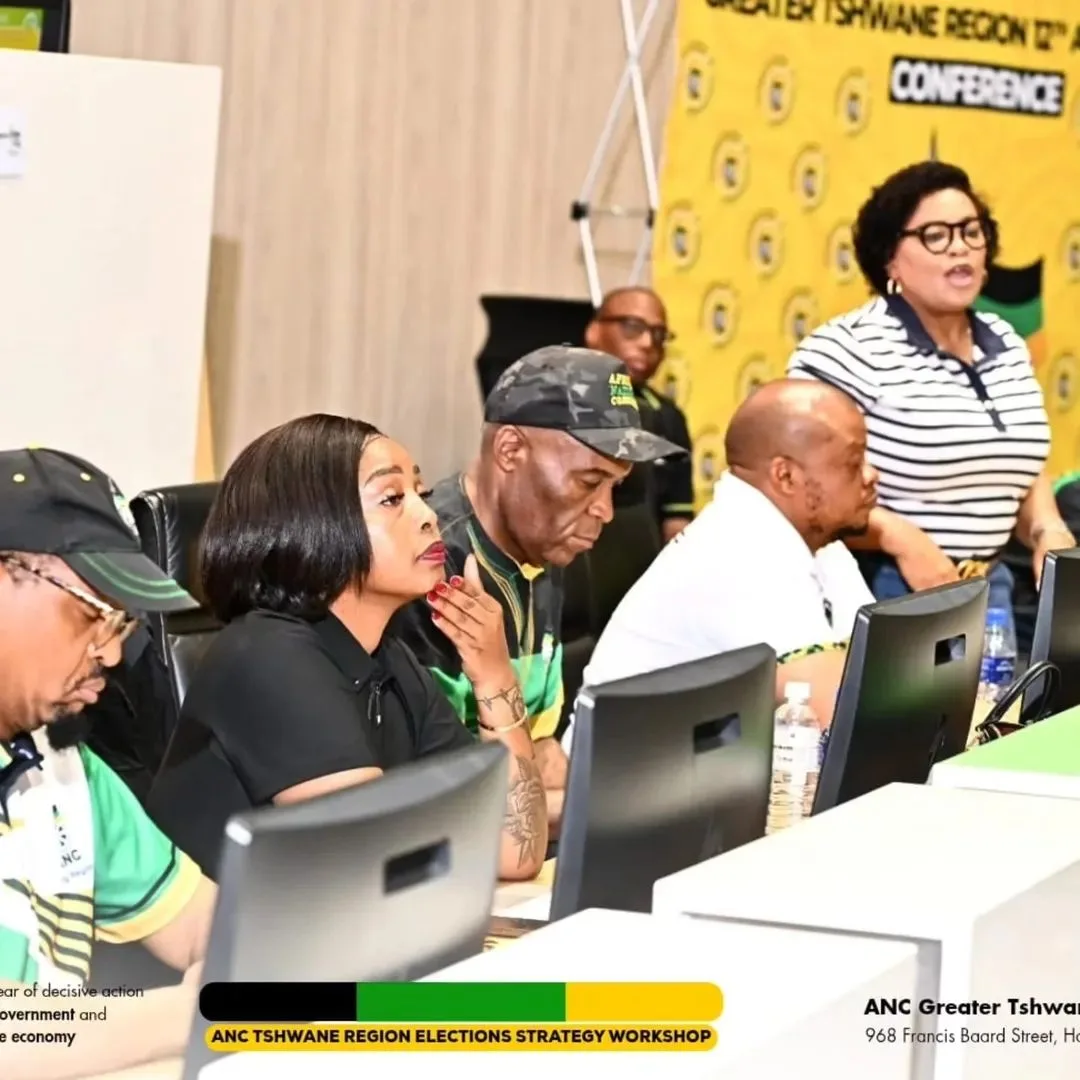
A significant development emerged over the weekend after reports confirmed that the ANC and DA had opened coalition discussions.
The engagement is particularly noteworthy given the political differences between the two parties and their competing positions within the national Government of National Unity.
The ANC's post-election position, following its Extended Special National Executive Committee meeting, is to engage all political parties, including smaller organisations, civic movements and independent councillors, in municipalities where no party secured an outright majority.
The party says its negotiating priorities include stable administrations, common programmes of government, measurable service-delivery targets, accountability and action against corruption.
The ANC has indicated that it will provide a further update on its coalition negotiations on Tuesday, 17 November.
However, the reported ANC–DA engagement should not be interpreted as a concluded agreement in Tshwane. Neither party has publicly confirmed a municipality-specific coalition arrangement.
Their combined representation of 118 councillors would nevertheless give them a comfortable majority, should they agree to govern together.
ActionSA's position: Moya must remain mayor
ActionSA has emerged as one of the most influential players in Tshwane's coalition negotiations.
The party's 48 seats make it a potential kingmaker, particularly because its support could enable either the DA or ANC to establish a majority administration.
ActionSA leader Herman Mashaba previously submitted a written proposal to the DA, seeking an arrangement that would allow Dr Nasiphi Moya to continue serving as executive mayor.
Among the proposals was that DA mayoral candidate Cilliers Brink relinquish his council seat, with the DA supporting Moya's return and nominating a deputy mayoral candidate acceptable to ActionSA.
Mashaba subsequently met DA leader Geordin Hill-Lewis on 12 November, describing their engagement as frank and productive.
However, the details of that meeting have not been fully disclosed, and the DA has not publicly accepted ActionSA's mayoral proposal.
The Associated Press has reported that the DA and ActionSA are expected to negotiate a Tshwane coalition without the ANC. This indicates a possible direction for negotiations, rather than confirmation of a signed agreement.
What does the council arithmetic reveal?
The election outcome has created several mathematically viable coalition combinations.
The DA and ActionSA together command 122 seats, placing them 14 seats above the majority threshold.
The ANC and DA have 118 seats between them, while an arrangement involving the ANC, ActionSA, EFF and MK Party would produce 109 seats.
The latter would have only one seat above the required majority.
The Freedom Front Plus, with 17 seats, could also become relevant in alternative governing arrangements.
These figures demonstrate that Tshwane's political future will depend less on which party won the most votes and more on which parties can agree on a common governing programme and secure sufficient support in council.
The Council of the Left introduces another consideration
The emergence of the Council of the Left has added another political dimension to the negotiations.
The grouping involves the EFF, MK Party, SACP, Afrika Mayibuye Movement and other left-leaning organisations.
It has called on the ANC to distance itself from the DA and Freedom Front Plus in the national Government of National Unity if it wants to pursue cooperation with the bloc.
However, the participating organisations are not necessarily negotiating as a single, fully consolidated voting bloc in the current municipal negotiations.
Their combined representation in Tshwane is 21 seats, comprising 13 EFF councillors, four MK Party councillors, three SACP councillors and one Afrika Mayibuye councillor.
While these numbers could influence the formation of an alternative administration, no formal Tshwane-specific agreement involving all four parties has been announced.
IEC gazettes elected councillors as Tshwane prepares for inaugural sitting
Beyond the political negotiations, the Electoral Commission of South Africa has taken an important administrative step towards establishing the new municipal councils.
The IEC published the names of elected councillors in Government Gazette No. 55741 on 13 November 2026.
The Commission confirmed that councillors are deemed elected with effect from 8 November, when the election results were announced.
Municipal managers are required to convene the first council meetings within the statutory period.
Reports have suggested that Tshwane's inaugural council sitting could take place on 19 November. However, an official City of Tshwane confirmation of that specific date has not yet been located.
The inaugural sitting will be particularly important because councillors must elect the new speaker and executive mayor.
The publication of elected councillors does not automatically install a mayor or confirm a coalition.
The election numbers remain unchanged
The latest available IEC-sourced results record all 796 of Tshwane's 796 voting districts as processed, with all 107 ward contests concluded.
The council allocation remains:
- DA – 74 seats - ActionSA – 48 seats - ANC – 44 seats - Freedom Front Plus – 17 seats - EFF – 13 seats - MK Party – 4 seats - SACP – 3 seats - Patriotic Alliance – 2 seats - Other smaller parties – 9 seats collectively
The IEC declared the national election results on 8 November and subsequently gazetted the elected councillors.
However, questions remain about the final determinations of certain election objections and recounts previously identified in Tshwane. The IEC's latest national objection figures should not be confused with Tshwane-specific outstanding matters.
The bigger question: Who will govern Tshwane?
The negotiations expose a fundamental political reality: winning the most seats does not automatically guarantee control of a municipality.
The DA has the largest council delegation, but it needs additional partners. ActionSA has substantial negotiating leverage, while the ANC's 44 seats make it an important participant in any alternative governing arrangement.
For residents, however, the eventual coalition should be judged on more than the distribution of mayoral and executive positions.
Tshwane continues to face pressing challenges involving water security, electricity infrastructure, financial management, municipal revenue collection, road maintenance and service delivery.
Any coalition agreement should therefore provide clear commitments, measurable targets and accountability mechanisms.
The immediate question is whether the DA and ActionSA can reach an agreement that accommodates Moya's mayoral ambitions, or whether the ANC can assemble an alternative majority through its engagements with other political formations.For now, Tshwane remains a hung council. The election has determined who sits in the chamber; the negotiations will determine who leads it.
Capital Daily News will continue monitoring the IEC's official records, coalition negotiations and preparations for Tshwane's inaugural council sitting.