The 2026 local government election has left Tshwane with a divided council and a difficult coalition question: will the DA lead the next administration, or can its opponents assemble a majority without it?
The council has 214 seats, meaning a party or coalition needs at least 108 votes to secure a majority. The DA has 74 seats, ActionSA 48 and the ANC 44. The remaining seats are distributed among the FF Plus, EFF, MK Party, SACP, PA and smaller parties.
The result gives the DA the largest single bloc, but not the numbers to govern alone. It also places ActionSA in a powerful negotiating position: its participation could determine which coalition reaches the required majority.
Mashaba’s proposal puts Tshwane mayoralty on the negotiating table
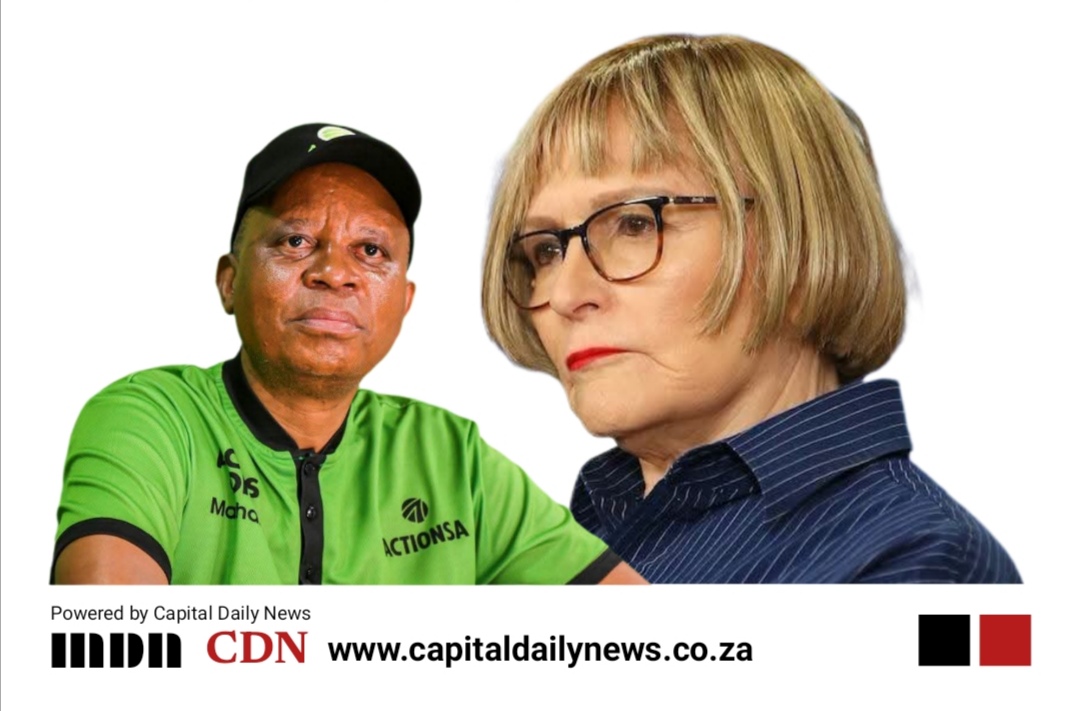
The most significant political development is a proposal by ActionSA president Herman Mashaba to the DA’s federal leader, Geordin Hill-Lewis, aimed at breaking the coalition deadlock across Gauteng’s three metros.
Under the reported proposal, the DA would retain the mayoral position in Johannesburg but nominate someone other than Helen Zille. In Tshwane, the DA would support ActionSA mayoral candidate Dr Nasiphi Moya, while Cilliers Brink would step aside from his council seat. ActionSA would accept a DA nominee for deputy mayor, subject to its approval.
The proposal is a political compromise on paper, not a coalition agreement. The DA has not publicly confirmed acceptance of its terms, and reporting has pointed to resistance within the party to being asked to withdraw candidates selected through its internal processes. ActionSA has also indicated that it does not want the letter’s contents negotiated through the media.
The dispute over Johannesburg is relevant to Tshwane because it exposes the central obstacle between the two parties: leadership and trust. Mashaba has sought to remove Zille from the Johannesburg mayoral contest as part of the proposed arrangement. That condition has become a point of public disagreement, rather than a settled matter between the parties.
The numbers: three possible routes to a majority The council arithmetic shows why neither the DA nor the ANC can afford to ignore ActionSA.
Possible arrangement Seats Outcome
DA + ActionSA 122 Majority DA + ANC 118 Majority ANC + ActionSA + FF Plus 109 Majority ANC + ActionSA + EFF + MK Party 109 Majority ANC + ActionSA + EFF 105 Short by 3
[Seat allocations are based on the published IEC results reproduced by independent election trackers. Majority threshold: 108 of 214 seats.]
These combinations are mathematical possibilities, not confirmed political agreements. In particular, the ANC–ActionSA–EFF–MK option would require cooperation among parties with different political positions and competing interests.
The DA–ActionSA arrangement appears numerically straightforward. Together, they would command 122 seats, giving them a 14-seat cushion above the majority threshold. But the political relationship between Mashaba and Zille has complicated what might otherwise have been the most direct route to a governing majority.
ActionSA's position: Moya must remain mayor
Mashaba has made it clear that retaining Nasiphi Moya as Tshwane mayor is a central condition for ActionSA's participation in a coalition.
That demand is significant because Moya is not simply a candidate being promoted during negotiations. She is the incumbent mayor, and ActionSA is seeking to retain the executive leadership position despite finishing behind the DA in the election.
Mashaba has also criticised Cilliers Brink, the DA's Tshwane mayoral candidate, and has demanded that he step aside under the proposed arrangement.
The DA, however, has its own political considerations. It won the largest number of seats and has a mandate from its supporters to lead the municipality. Agreeing to surrender the mayoral position to ActionSA would require the party to explain why its electoral lead should not translate into the mayoralty.
Thursday's talks could test whether compromise is possible
A significant next step is expected on Thursday, 12 November, when ActionSA and the DA are scheduled to hold face-to-face coalition discussions.
This means ActionSA is not relying exclusively on a DA agreement. It is keeping alternative negotiations open while attempting to secure its preferred leadership arrangement in Tshwane.
The DA's response to the proposed terms remains crucial. As of the latest reporting, there is no publicly confirmed agreement accepting Mashaba's conditions.
The bigger question: who gets to govern Tshwane?
The election has produced a clear first-place party, but not a clear governing majority. The DA's 74 seats make it the largest party in the council, while ActionSA's 48 seats give it considerable bargaining power.
However, the negotiations are raising a difficult democratic question: should the largest party automatically lead the municipality, or can a coalition of smaller parties legitimately elect a mayor from outside the leading party?
South Africa's coalition system allows councillors to elect a mayor through a council majority. The largest party does not automatically receive the mayoralty. But the political legitimacy of such an arrangement will depend on whether the coalition can demonstrate that it has a coherent programme of government and can deliver stable administration.
There is also a danger in treating the mayoral position as the central prize while overlooking the municipality's actual problems. Tshwane residents are not voting for another round of political negotiations. They expect reliable water supply, functioning roads, improved waste collection, accountable spending and an administration capable of delivering basic services.
A coalition assembled solely to keep another party out of office, without a credible governing programme, risks reproducing the instability that has weakened municipal administration in previous years.
CDN assessment: ActionSA has leverage, but the DA has the electoral advantage
The current negotiations place ActionSA in an unusually influential position. Its 48 seats can help the DA form a majority or allow the ANC to assemble an alternative coalition with smaller parties.
Mashaba is therefore negotiating from a position of strength. But his demands also carry political risks. If ActionSA insists on conditions the DA considers unacceptable, it could push the negotiations towards an ANC-led arrangement.
For the DA, refusing to compromise could mean losing control of Tshwane despite winning the most seats. For the ANC, supporting an alternative coalition could offer a route back into municipal executive power after a significant electoral setback.
The decisive question is whether the parties can move beyond personalities and negotiate a coalition based on measurable service-delivery commitments, financial accountability and administrative stability.
Tshwane has not yet chosen its next governing coalition. The DA has the largest electoral bloc, ActionSA holds the balance of power, and the ANC remains a possible partner in an alternative arrangement. Until councillors elect a mayor and an executive, claims that any party has secured control of the capital should be treated with caution.
What remains unconfirmed -Whether the DA will accept Mashaba's proposal. -Whether ActionSA and the DA can agree on Moya's continued mayoralty. -Whether the ANC, EFF and MK Party will formalise a joint arrangement with ActionSA. -The final coalition agreement, mayoral election and executive committee composition.