By Capital Daily News | Political Analysis
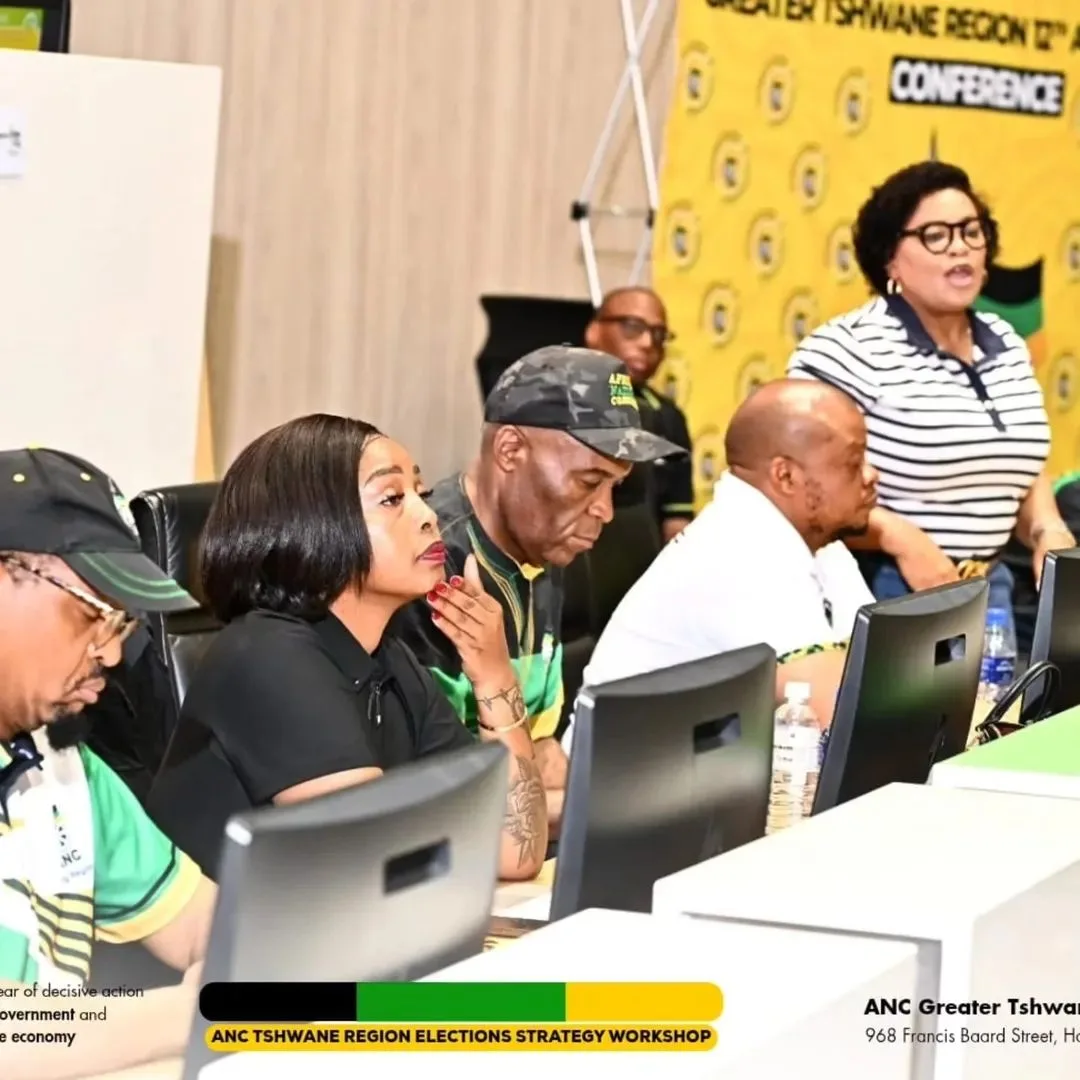
South Africa's 2026 Local Government Elections have delivered a political message that the African National Congress (ANC) can no longer afford to dismiss as an ordinary electoral setback.
The party that governed South Africa for more than three decades has secured just 30.76% of the national vote, down from 45.59% in the 2021 local government elections.
Although the ANC remains the largest political party nationally, its electoral position has weakened substantially. The Democratic Alliance (DA) secured 24.64%, Jacob Zuma's uMkhonto weSizwe (MK) Party received 9.76%, the Economic Freedom Fighters (EFF) obtained 6.22%, while ActionSA secured 5.67%.
The results have also left numerous municipalities without outright majorities, forcing political parties into coalition negotiations.
But beyond the numbers lies a much bigger political story.
This is a story about leadership, broken promises, internal divisions, political revenge, ideological disagreements and a liberation movement struggling to define its future.
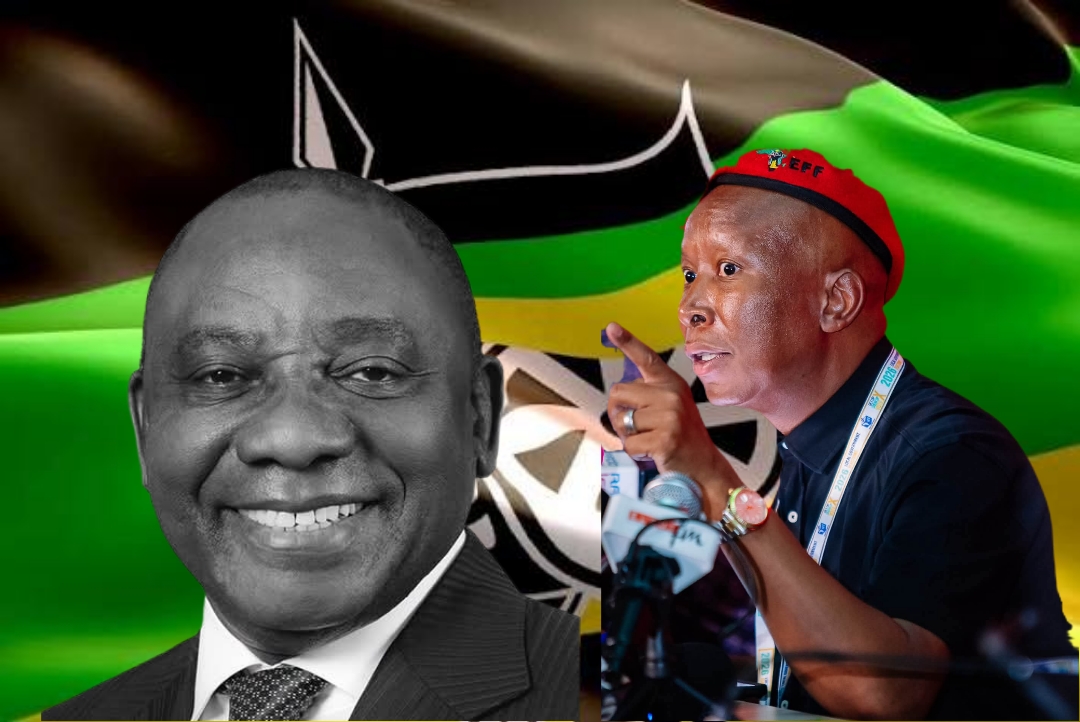
At the centre of this unfolding political drama are three former and current political heavyweights: Cyril Ramaphosa, Jacob Zuma and Julius Malema.
And watching from the sidelines, but not without an intervention, is former president Thabo Mbeki.
RAMAPHOSA'S 'THUMA MINA': WHAT HAPPENED TO THE PROMISE?
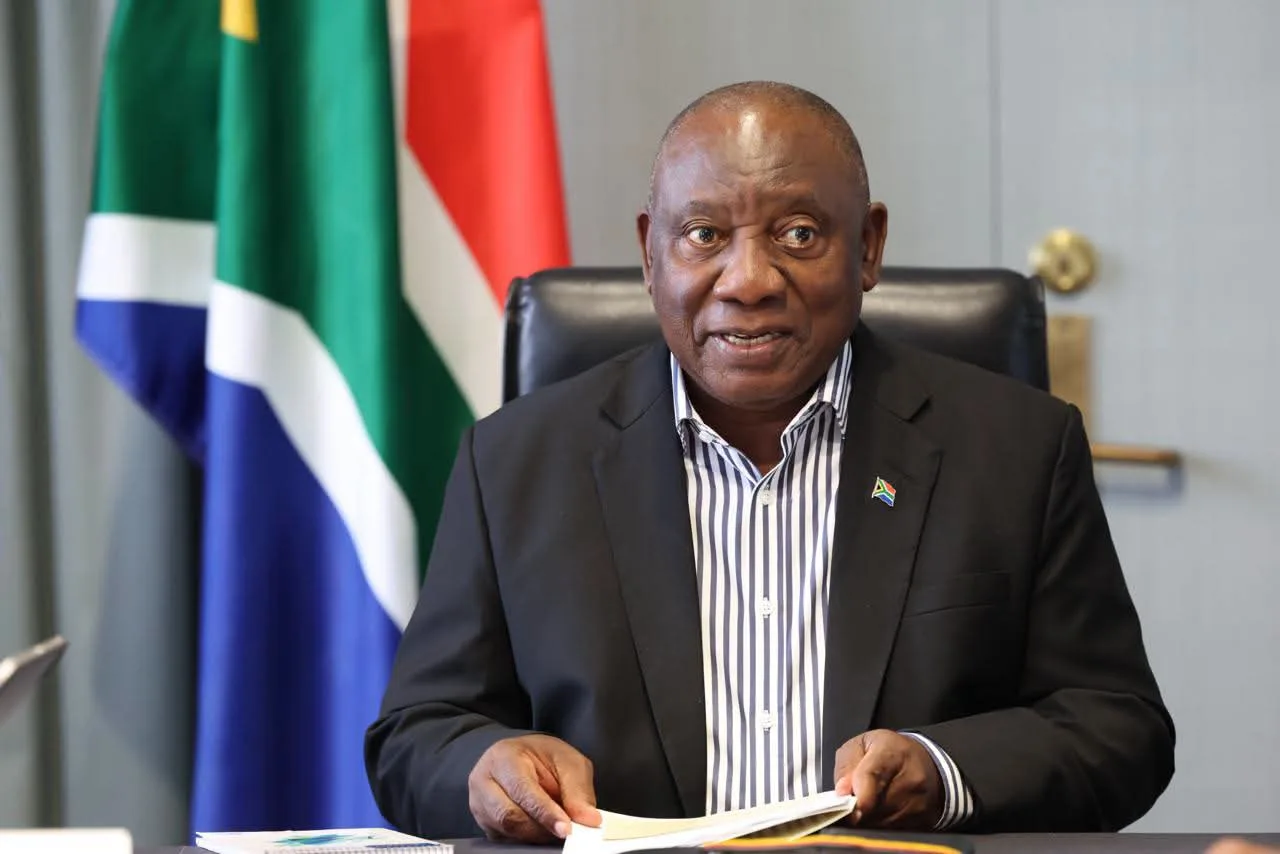
When Cyril Ramaphosa became ANC president in December 2017, he represented what many within the organisation hoped would be a new beginning.
His election followed years of controversy surrounding Jacob Zuma's presidency, growing public dissatisfaction and mounting allegations of state capture.
In February 2018, following the ANC's decision to recall Zuma, Ramaphosa assumed the country's presidency.
His political message was built around renewal, economic recovery, fighting corruption and restoring confidence in public institutions.
The phrase 'Thuma Mina' — Send Me — became closely associated with his presidency.
It represented a promise of service, responsibility and national rebuilding.
However, nearly nine years after becoming ANC president, the question is whether that promise has translated into the political and institutional transformation South Africans were led to expect.
The ANC's electoral performance provides an important measure of the public's changing relationship with the party.
From 45.59% in 2021 to 30.76% in 2026, the decline is significant.
It would be unfair to attribute every municipal failure to Ramaphosa personally. Municipalities have their own elected leadership, administrative structures and accountability mechanisms.
Nevertheless, Ramaphosa is both ANC president and head of the national government. He cannot entirely separate himself from the broader political fortunes of the organisation he leads.
The question is therefore not simply whether Ramaphosa should resign.
It is whether the ANC's leadership is prepared to accept political responsibility for an electoral outcome that its secretary-general, Fikile Mbalula, has described as catastrophic.
THE RESIGNATION QUESTION: RAMAPHOSA IS NOT READY TO LEAVE
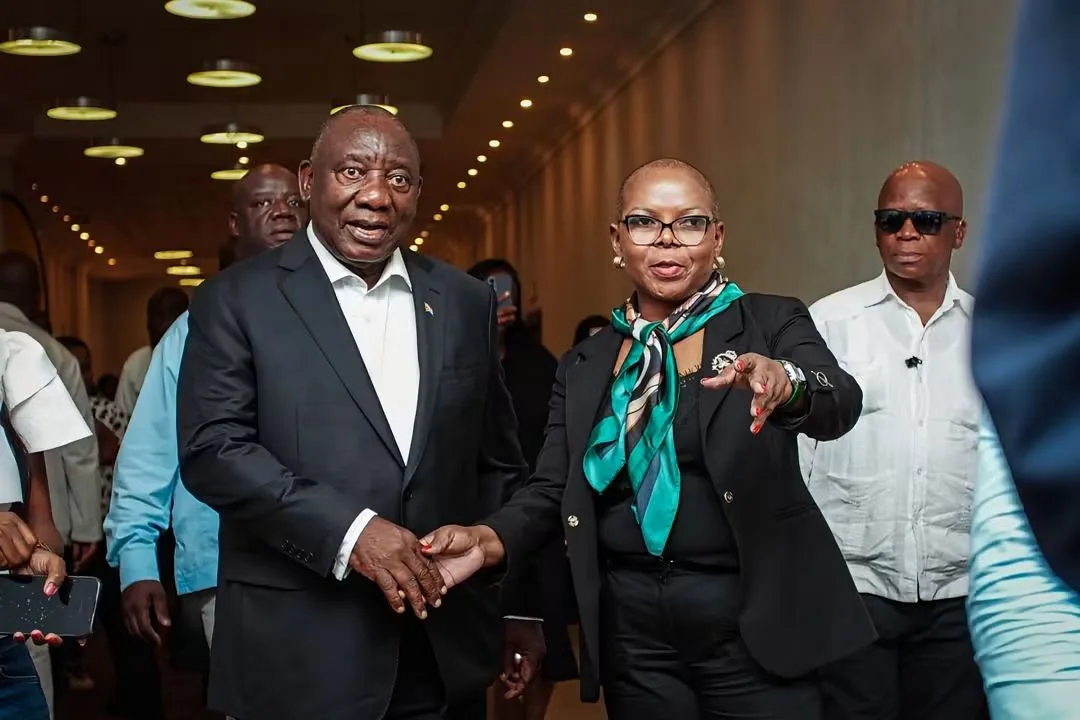
Following the announcement of the election results, speculation emerged that Ramaphosa could step down from his position as ANC president.
He dismissed the rumours.
Speaking on the sidelines of the IEC's results announcement on 8 November, Ramaphosa questioned where the resignation claims originated and described them as preposterous.
He also said the party accepted the electorate's verdict with humility.
His response raises an uncomfortable political question.
Can a party leader continue in office following such a substantial electoral decline without facing serious internal demands for accountability?
Ramaphosa was elected through the ANC's internal processes, and an electoral defeat does not automatically terminate his mandate.
However, political mandates are also accompanied by political responsibility.
His continued leadership should therefore be examined against the ANC's performance, its renewal commitments and the party's ability to regain public confidence.
The issue is not whether he is personally entitled to remain in office. It is whether the organisation can convincingly explain why its existing leadership approach should continue unchanged.
JACOB ZUMA: THE FORMER PRESIDENT WHO REFUSED TO DISAPPEAR
Perhaps one of the most consequential developments in South African politics since 2023 has been Jacob Zuma's decision to establish his political future outside the ANC's electoral structures.
Zuma's relationship with Ramaphosa deteriorated following the 2017 ANC leadership contest and his subsequent recall from the presidency in February 2018.
But his departure from the Union Buildings did not mean the end of his political influence.
In December 2023, Zuma publicly announced his support for the newly established MK Party and indicated that he would not campaign for the ANC under Ramaphosa's leadership.
Importantly, Zuma maintained that he remained an ANC member and presented his political intervention as an attempt to rescue the organisation.
His position was extraordinary.
He was effectively establishing a competing political organisation while arguing that his ultimate political allegiance remained connected to the ANC.
This was not simply another opposition party entering the political arena.
It was a challenge from a former ANC president who understood the organisation's internal structures, historical support base and political vulnerabilities.
The 2024 national elections demonstrated the impact of that intervention.
The MK Party secured approximately 14.6% of the national vote, becoming the third-largest political party.
The 2026 local elections have continued that challenge, with MK securing 9.76% nationally and emerging as a major force in KwaZulu-Natal.
Zuma's political strategy has therefore had consequences for the ANC beyond the immediate leadership dispute that preceded his departure.
However, it would be inaccurate to suggest that Zuma alone caused the ANC's decline. The party's problems with governance, corruption allegations, unemployment and internal divisions predate the establishment of MK.
The question is whether Zuma's intervention accelerated an already existing crisis.
ZUMA'S POLITICAL MESSAGE: RESCUING THE ANC OR REPLACING ITS LEADERSHIP?
There is a fundamental contradiction in Zuma's political position that deserves attention.
He says he wants to rescue the ANC, yet he has established and led a separate political organisation that competes directly against it.
His argument has centred on the belief that the ANC has moved away from its historical political direction under Ramaphosa.
But rescuing an organisation and weakening its electoral support from outside are not necessarily the same thing.
Zuma's continued identification with the ANC raises another question: is his ultimate objective to rebuild the organisation, or to see a different leadership structure take control of it?
His political ambitions must also be considered alongside his own presidential record.
The Zondo Commission examined extensive allegations of state capture during his administration. Zuma has disputed allegations against him, and the findings of the commission should not be confused with a criminal conviction in every matter it examined.
Nevertheless, his record remains part of any serious examination of his claim to offer a solution to the ANC's current problems.
Ramaphosa cannot indefinitely blame his predecessor for the ANC's present condition.
Equally, Zuma cannot present himself as the answer without being questioned about the period in which he held the country's highest political office.
Both former political allies must be judged against their respective records.
MALEMA'S WARNING: THE ANC CHOSE THE DA, NOT ITS HISTORICAL ALLIES
Julius Malema's 7 November press conference introduced another dimension to the debate.
Following the EFF's own disappointing electoral performance, Malema called for greater cooperation between the ANC, EFF, MK Party and South African Communist Party.
He argued that organisations with broadly shared positions on land redistribution, economic transformation and affirmative action should not allow personal rivalries to undermine political cooperation.
His criticism was particularly directed at the ANC's decision to enter the Government of National Unity with the DA following the 2024 national elections.
Malema's argument was that the ANC had helped legitimise a political organisation it had historically opposed, while distancing itself from parties with which it shared aspects of its ideological programme.
He also suggested that the ANC should reconsider its relationship with the DA and its approach to coalition negotiations.
But Malema's intervention comes with an important complication.
The EFF itself fell from 10.31% in the 2021 local government elections to approximately 6.22% in 2026.
The party has therefore also experienced a substantial decline in electoral support.
Malema acknowledged the setback and committed the EFF to focusing on the 37 wards it won, including practical interventions around water shortages and deteriorating roads.
His proposed progressive alliance may therefore be understood as both an ideological argument and an attempt to encourage cooperation among political formations experiencing different forms of electoral pressure.
The question remains whether the ANC, MK Party, EFF and SACP can overcome their historical disagreements and leadership rivalries sufficiently to form a meaningful political arrangement.
THE GNU: DID RAMAPHOSA GIVE THE DA POLITICAL LEGITIMACY?
The ANC's decision to enter a Government of National Unity with the DA following the 2024 elections remains one of the most consequential political decisions of Ramaphosa's presidency.
The arrangement followed the ANC's loss of its parliamentary majority for the first time since 1994.
It was a political necessity arising from the election results, rather than an arrangement entered into from a position of electoral dominance.
However, the GNU also created an ideological challenge for the ANC.
For years, the ANC had presented itself as the principal political alternative to the DA.
The two parties had repeatedly disagreed over economic policy, transformation, affirmative action and the role of the state.
Entering a national governing arrangement required the ANC to work alongside a party it had spent years politically opposing.
Malema argues that this weakened the ideological distinction between the ANC and the DA.
That argument deserves consideration, although it cannot independently explain the ANC's electoral decline.
The ANC had already lost its national majority in 2024. Its municipal governance difficulties, internal divisions and declining public confidence were not created by the GNU.
Nevertheless, the arrangement has changed the political environment in which the ANC now operates.
The 2026 elections have exposed the consequences of that changing environment.
MBEKI'S INTERVENTION: THE ANC MUST LOOK IN THE MIRROR
Former president Thabo Mbeki's intervention on 10 November adds considerable weight to the leadership debate.
Mbeki has urged the ANC to prioritise its institutional survival rather than concentrate exclusively on retaining positions in municipalities where it no longer commands sufficient electoral support.
He has also questioned why the party has repeatedly adopted organisational renewal resolutions without implementing them.
His criticism is particularly important because it comes from within the ANC's historical leadership.
Mbeki argued that poor service delivery alone does not explain the party's electoral decline.
He also pointed to negative public perceptions of certain ANC leaders, suggesting that the party's own internal research had previously identified leadership as part of its electoral problem.
His intervention raises a difficult question for the current leadership:
If the ANC knew that its organisational credibility and leadership were becoming electoral liabilities, why were the necessary corrective measures not implemented?
The party cannot continue adopting renewal resolutions at national conferences while leaving the underlying problems unresolved.
Mbeki's warning is therefore not simply about electoral performance. It is about the survival of the organisation itself.
THE BIGGER CRISIS: THE LIBERATION MOVEMENT IS FRAGMENTING
Perhaps the most important lesson from the 2026 elections is that the ANC's historical political family is no longer operating as a unified political force.
The ANC, MK Party, EFF and SACP now occupy different political positions, despite sharing parts of the country's liberation history and, in some cases, overlapping ideological commitments.
The SACP's decision to contest the elections independently is another indication of this fragmentation. It secured 271 ward seats, demonstrating that even historically aligned organisations are increasingly willing to pursue independent electoral mandates.
Meanwhile, the DA has expanded its electoral influence, and ActionSA has established itself as another significant player in the coalition environment.
The political landscape is changing.
Historical liberation credentials are no longer sufficient to guarantee electoral loyalty.
Voters are increasingly assessing parties through their records, policies, leadership and ability to address everyday challenges.
That is a reality every political organisation must confront.
WHAT HAPPENS NEXT?
The immediate challenge is coalition formation and municipal stability.
The ANC must decide whether it is prepared to accept a reduced governing role in municipalities where voters have withdrawn its majority.
The DA and other opposition parties must demonstrate that electoral gains can translate into functioning administrations.
The MK Party must establish whether its electoral support can be sustained through practical municipal governance.
The EFF must determine whether its political messaging can translate into stronger community-level performance.
And the ANC's leadership must confront questions about renewal, succession and accountability.
The next ANC national leadership conference, expected in 2027, will become an important moment in determining the organisation's direction.
Ramaphosa's continued leadership, the influence of Zuma's political movement and Malema's proposed progressive alliance will all form part of that broader debate.
THE FINAL QUESTION: WHO IS ACCOUNTABLE FOR THE ANC'S DECLINE?
The 2026 elections should not be interpreted as a personal victory for Zuma, Malema or any other opposition leader.
Nor should they be treated as proof that the ANC's political existence is coming to an end.
The party remains the largest nationally, with 30.76% of the vote and 3,246 council seats.
But the decline from 45.59% in 2021 is too substantial to dismiss.
Ramaphosa promised renewal. Zuma established a political alternative while claiming to rescue the ANC. Malema is calling for a progressive alliance. Mbeki is questioning why organisational renewal has not been implemented.
These are different political positions, but they point towards one central issue: the ANC's historical identity and its present political performance are increasingly disconnected.
The organisation cannot rely indefinitely on the sacrifices of the liberation struggle to defend its contemporary record.
It must answer for the government it has led, the municipalities it has governed, the promises it has made and the public confidence it has lost.
And perhaps the most uncomfortable question for the ANC is this:
If the party's own former president, former allies and millions of voters are questioning its direction, is the problem really the opposition — or is the ANC finally being confronted by the consequences of its own political choices?Capital Daily News will continue examining the coalition negotiations and the political accountability of parties entrusted with governing South African communities.