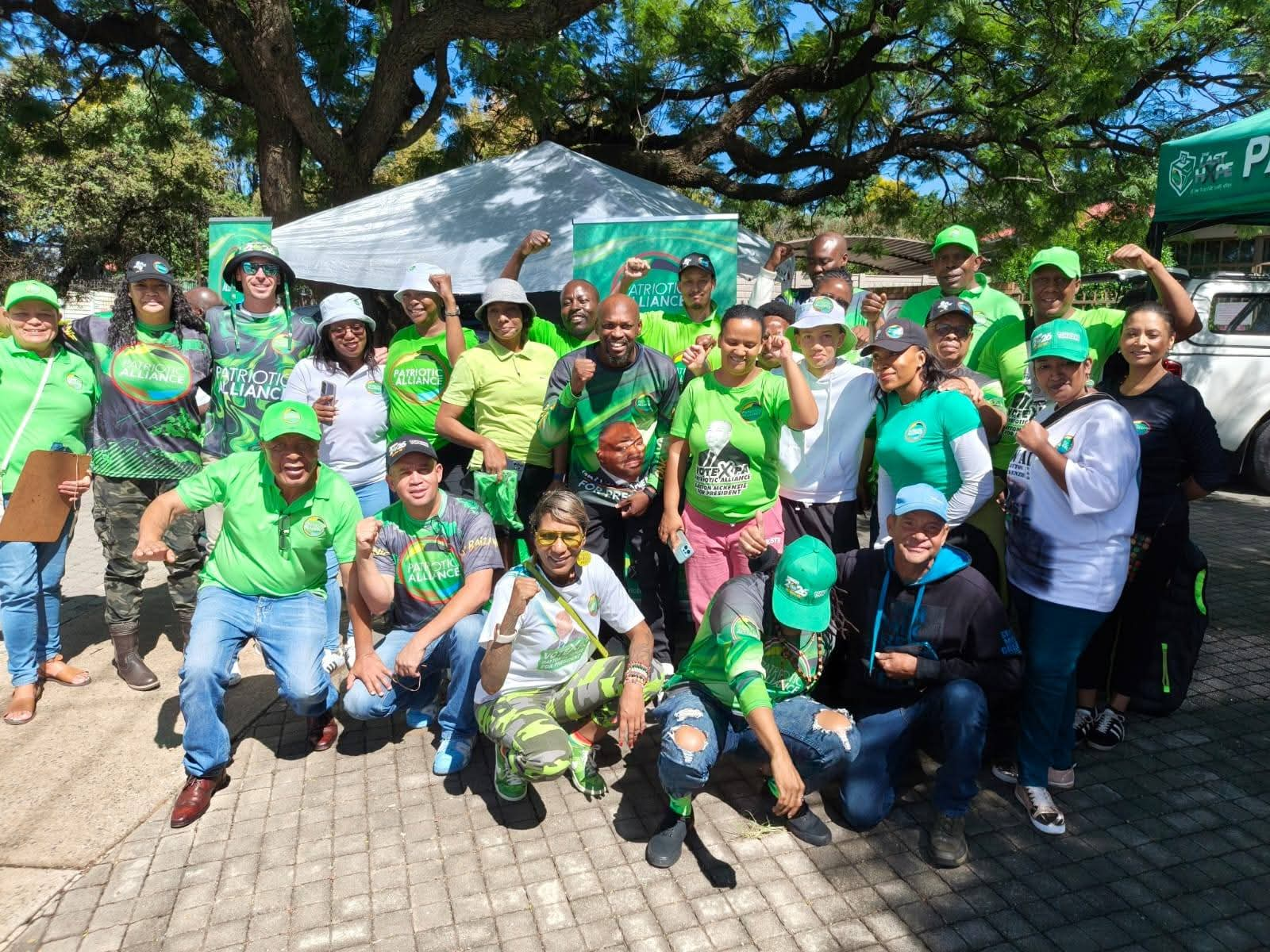
The Patriotic Alliance (PA) may have established a recognisable political brand, but the provisional 2026 Local Government Election results in the City of Tshwane suggest that translating political visibility into electoral support remains a challenge.
With 3,374 votes, representing just 0.6% of the provisional ward-ballot results, the party finds itself far behind Tshwane's leading political contenders.
The figures offer a sobering reality check for a party seeking to strengthen its footprint across South Africa.
According to the provisional results, the PA occupies eighth position among the 16 listed entries. It is ahead of several smaller political formations, but its performance is hardly one that suggests significant electoral influence in the capital.
Big political ambitions, limited electoral returns
The numbers tell a story that political messaging cannot easily change.
The Democratic Alliance (DA) is leading the Tshwane race with 184,479 votes, representing 33.7%.
The African National Congress (ANC) follows with 116,766 votes (21.4%), while ActionSA is close behind with 115,554 votes (21.1%).
Against this backdrop, the PA's 3,374 votes highlight the considerable distance between its electoral support and that of the parties competing for control of the municipality.
The question is unavoidable: if political influence is measured at the ballot box, how much influence has the PA actually established in Tshwane?
Not last, but far from impressive
For the record, the PA is not the worst-performing entry in the provisional results.
The Pan Africanist Congress of Azania (PAC) currently occupies the bottom position with 1,182 votes (0.2%), while Build One South Africa (BOSA) has 1,292 votes (0.2%).
Nevertheless, finishing ahead of smaller parties should not be confused with a strong electoral performance. The PA's 0.6% showing places it among the lower-performing political formations in the metropolitan municipality.
The bigger political picture
While the PA's performance deserves scrutiny, the more significant political development is the ANC's position.
The governing party is trailing the DA by more than 12 percentage points, while ActionSA is separated from it by just 0.3 percentage points. This suggests that Tshwane's political landscape is undergoing another significant shift, with coalition negotiations likely to determine the next administration.
For the PA, however, the immediate challenge is more fundamental: converting political visibility and ambition into measurable voter support. At the end of the day, political popularity cannot be established through speeches, slogans or social media visibility. The ballot box is where political claims are tested — and in Tshwane, the PA has some serious questions to answer.
Capital Daily News will continue monitoring the final IEC results and the implications for Tshwane's political future.image : PA Facebook