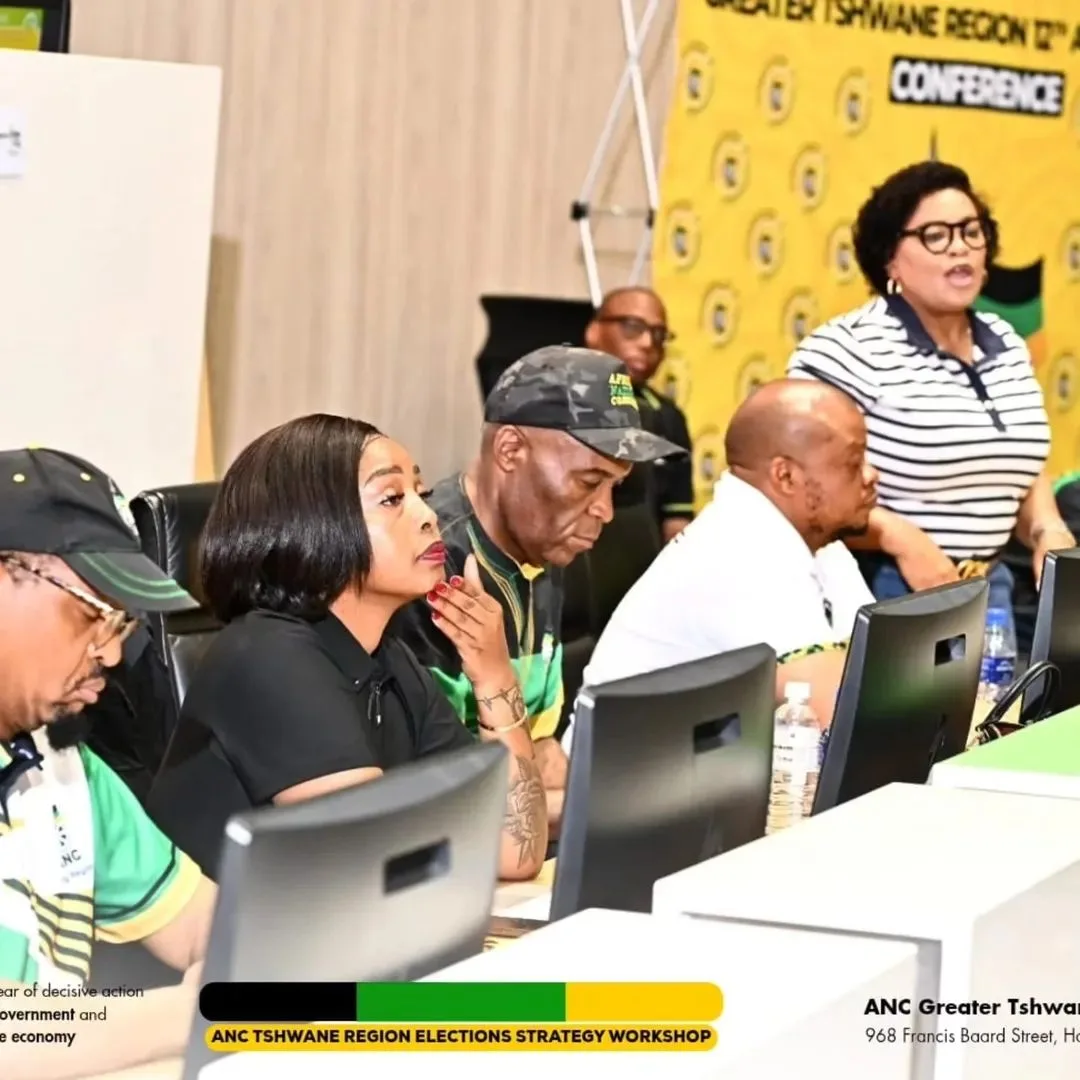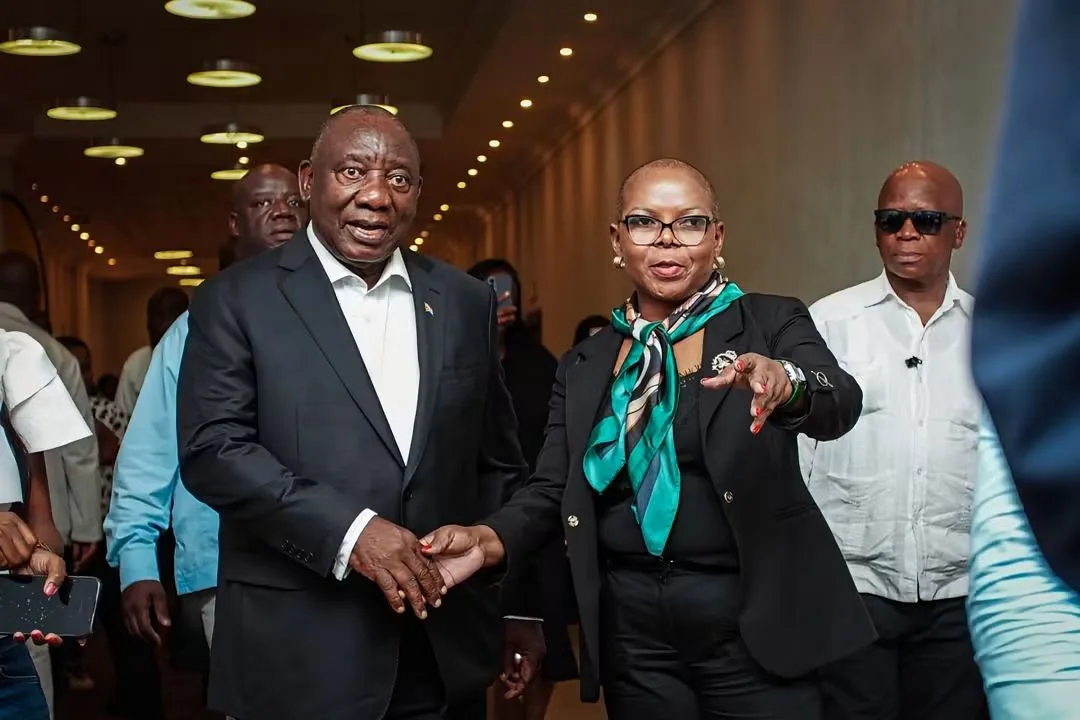
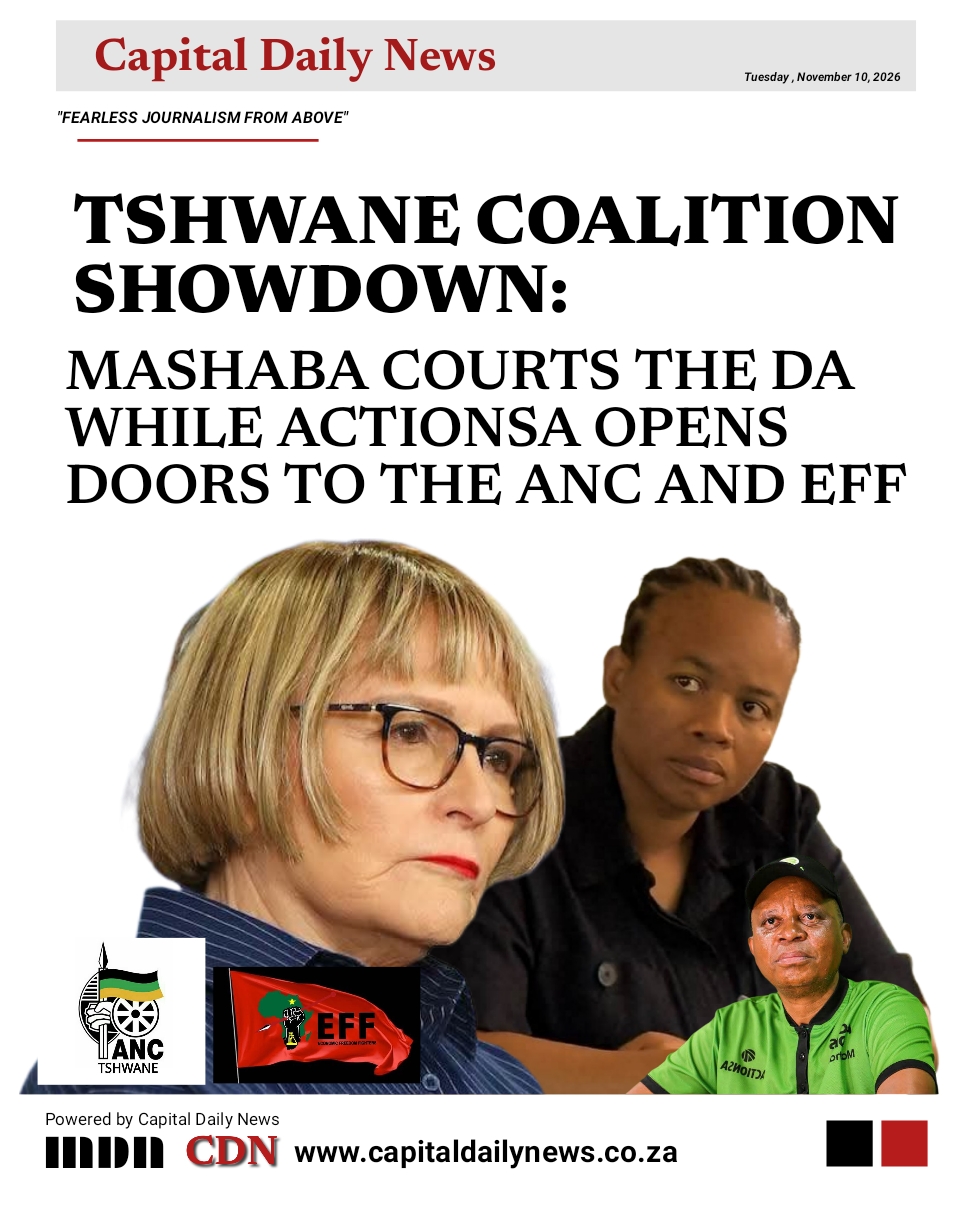
The political contest for control of the City of Tshwane is entering a critical phase, with ActionSA emerging as the central player in negotiations that could determine the municipality's next administration.
Following the 2026 Local Government Elections, no political party secured an outright majority in the 214-seat council.
The Democratic Alliance (DA) finished first with 74 seats, ActionSA secured 48, while the African National Congress (ANC) obtained 44.
The results have created a political situation in which the DA has the largest electoral mandate, but ActionSA holds the balance of power.
Herman Mashaba's party can potentially deliver a governing majority to the DA or help construct an alternative administration involving the ANC, Economic Freedom Fighters (EFF) and MK Party.
However, recent developments suggest that ActionSA is not prepared to commit itself to either side without significant political concessions.
MASHABA'S PROPOSAL: THE DA MUST MAKE ROOM FOR ACTIONSA
One of the most significant developments is a written proposal Mashaba reportedly sent to DA federal leader Geordin Hill-Lewis on 7 November.
The proposal seeks to resolve political disagreements between the two parties across Gauteng's three metropolitan municipalities.
For Tshwane, Mashaba wants the DA to support Dr Nasiphi Moya as executive mayor for another five-year term.
The proposal also calls for DA mayoral candidate Cilliers Brink to step aside from his council seat, with the DA nominating a deputy mayoral candidate acceptable to ActionSA.
In Johannesburg, Mashaba proposed that both himself and Helen Zille step aside from the mayoral contest, allowing the DA to nominate another candidate acceptable to ActionSA.
In Ekurhuleni, ActionSA indicated its willingness to support a DA mayoral candidate.
The proposal is an attempt to establish a broader political understanding between the two parties. However, it also places considerable demands on the DA, which finished ahead of ActionSA in Tshwane and has its own mayoral candidate.
DA insiders have reportedly expressed reservations about being instructed to withdraw candidates selected through the party's internal processes.
The DA has not publicly confirmed acceptance of Mashaba's conditions.
ACTIONSA ALSO TALKS TO THE ANC AND EFF
While Mashaba's proposal to the DA has attracted attention, ActionSA has simultaneously opened discussions with other political formations.
National chairperson Michael Beaumont confirmed that ActionSA had held an engagement with the ANC, describing the meeting as productive and respectful.
The party also met the EFF's negotiating team.
These engagements are important because they demonstrate that ActionSA is considering more than one route to government.
A potential ANC–ActionSA–EFF–MK arrangement would command 109 seats, just one above the required majority of 108.
Such a coalition could return the ANC to the Tshwane administration despite the party finishing third in the election.
But the arrangement would be numerically fragile. A single defection or loss of support could place the administration's majority under pressure.
There is also the question of whether four parties with different political positions could agree on a common programme of government and maintain stability.
ActionSA has not confirmed that it intends to enter such an arrangement.
THE MAYORAL QUESTION: MOYA OR BRINK?
At the centre of the Tshwane negotiations is the future of the mayoral office.
ActionSA wants Nasiphi Moya returned to the position, arguing that continuity is important for municipal planning and governance.
The DA, meanwhile, has an electoral argument of its own.
It secured 74 seats, compared with ActionSA's 48. Its candidate, Cilliers Brink, was presented to voters as the party's mayoral choice.
The difficulty is that electoral victory in a hung council does not automatically translate into the mayoralty. The DA needs additional support, and ActionSA's 48 seats are enough to provide it with a comfortable majority.
If the DA accepts Moya's return, it could secure a 122-seat coalition.
If it refuses, ActionSA could continue exploring an arrangement with the ANC and other parties.
This leaves the DA with a difficult choice: compromise on the mayoral position or risk being excluded from the administration.
For ActionSA, the challenge is equally serious. It must demonstrate that its insistence on Moya is about continuity and governance rather than simply retaining political office.
THE ANC'S POSITION: A POSSIBLE RETURN TO POWER
The ANC's fall from 75 seats in 2021 to 44 in 2026 represents a substantial electoral decline. It is now the third-largest party in Tshwane, behind both the DA and ActionSA. Yet the party remains a possible coalition partner. Its engagement with ActionSA and the EFF suggests that it is exploring ways to participate in the next administration. The ANC's national coalition position is expected to become clearer following the announcement anticipated from secretary-general Fikile Mbalula on 13 November. For the ANC, a coalition agreement in Tshwane could offer an opportunity to return to municipal government. But such an arrangement would require political compromise, particularly if ActionSA insists on retaining Moya as mayor. The ANC would have to decide whether participating in an administration led by another party is preferable to remaining in opposition.IS MASHABA NEGOTIATING FOR GOVERNANCE OR LEVERAGE?
There is an important political contradiction that deserves scrutiny.
Mashaba has publicly criticised the DA and raised concerns about its leadership, yet he has also put forward a proposal that would give the DA governing opportunities across Gauteng's three metros.
At the same time, ActionSA is engaging the ANC and EFF.This does not automatically mean that Mashaba is negotiating in bad faith. Political parties routinely engage multiple potential partners before committing to an agreement.
However, it raises an important question about ActionSA's priorities.
Is the party primarily seeking a stable coalition with the DA, or is it using the possibility of an ANC-led arrangement to strengthen its negotiating position?
The answer will become clearer when ActionSA explains what it is prepared to concede and what it considers non-negotiable.
The party's insistence on Moya's return is already a significant indicator.
THE NUMBERS THAT WILL DETERMINE TSHWANE'S FUTURE
The council arithmetic leaves several possible routes to a majority.
- DA + ActionSA: 122 seats. - DA + ANC: 118 seats. - ANC + ActionSA + EFF + MK Party: 109 seats. - ANC + ActionSA + EFF: 105 seats.
The DA–ActionSA combination is the strongest numerical option among these scenarios.
But a larger majority does not necessarily mean a more stable coalition. Political compatibility, executive appointments, policy agreements and mechanisms for resolving disputes will matter just as much.No combination should be presented as a confirmed governing arrangement until the parties formally announce an agreement and the council elects its leadership.
WHAT RESIDENTS SHOULD DEMAND FROM THE NEXT ADMINISTRATION
Tshwane residents have witnessed repeated changes in political leadership and coalition arrangements.
The next administration must demonstrate that it understands the urgency of municipal service delivery.
Water shortages, electricity reliability, road maintenance, infrastructure failures, municipal finances and accountability cannot become secondary issues while political parties negotiate executive positions.
Any coalition agreement should include measurable targets, clear responsibilities and public reporting on performance.
Residents should also demand transparency about the distribution of mayoral committee positions and the appointment of senior municipal officials.
A coalition should be judged by what it delivers, not simply by how many parties sign an agreement.CDN ANALYSIS: ACTIONSA HAS THE POWER TO DECIDE, BUT ALSO THE RESPONSIBILITY TO DELIVER
ActionSA has emerged from the 2026 election with a stronger negotiating position than the ANC and a pivotal role in determining whether the DA governs Tshwane.
Mashaba's proposal to Hill-Lewis demonstrates that ActionSA wants more than a supporting role in the next administration.
Its parallel discussions with the ANC and EFF show that it is keeping alternative political arrangements open.
That may be sound negotiating strategy, but it also places the party under greater public scrutiny.
If ActionSA chooses the DA, it must explain why the concessions it secured are in the best interests of Tshwane.
If it chooses the ANC, EFF and MK Party, it must explain how that arrangement will avoid the instability that has characterised previous coalition disputes.
The DA must also recognise that finishing first does not give it an automatic right to govern without compromise. Meanwhile, the ANC must confront the reality that it is negotiating from a significantly weaker electoral position.
Ultimately, the residents of Tshwane did not vote to give political parties an opportunity to trade positions indefinitely.
They voted for representatives expected to govern.
THE FINAL QUESTION: WHO IS PREPARED TO COMPROMISE FOR TSHWANE?
The coalition contest is now about more than the next mayor.
It is a test of political maturity, accountability and the willingness of competing parties to put municipal governance ahead of their internal political ambitions.
Mashaba has placed Moya's return at the centre of his proposal. The DA must decide whether it is prepared to accept that condition. The ANC and EFF are exploring their own options.
As of 10 November 2026, no coalition agreement has been confirmed and no new executive mayor has been elected.
And the political parties negotiating its future should remember that the real audience is not sitting around the negotiating table.
It is the electorate.
Capital Daily News (CDN)Editorial clarification: The coalition combinations are mathematical possibilities based on the reported council seat allocation. Mashaba's proposal to the DA has been reported, but acceptance has not been established. Meetings between ActionSA, the ANC and EFF do not constitute a coalition agreement. The mayor will be elected through the formal council process.