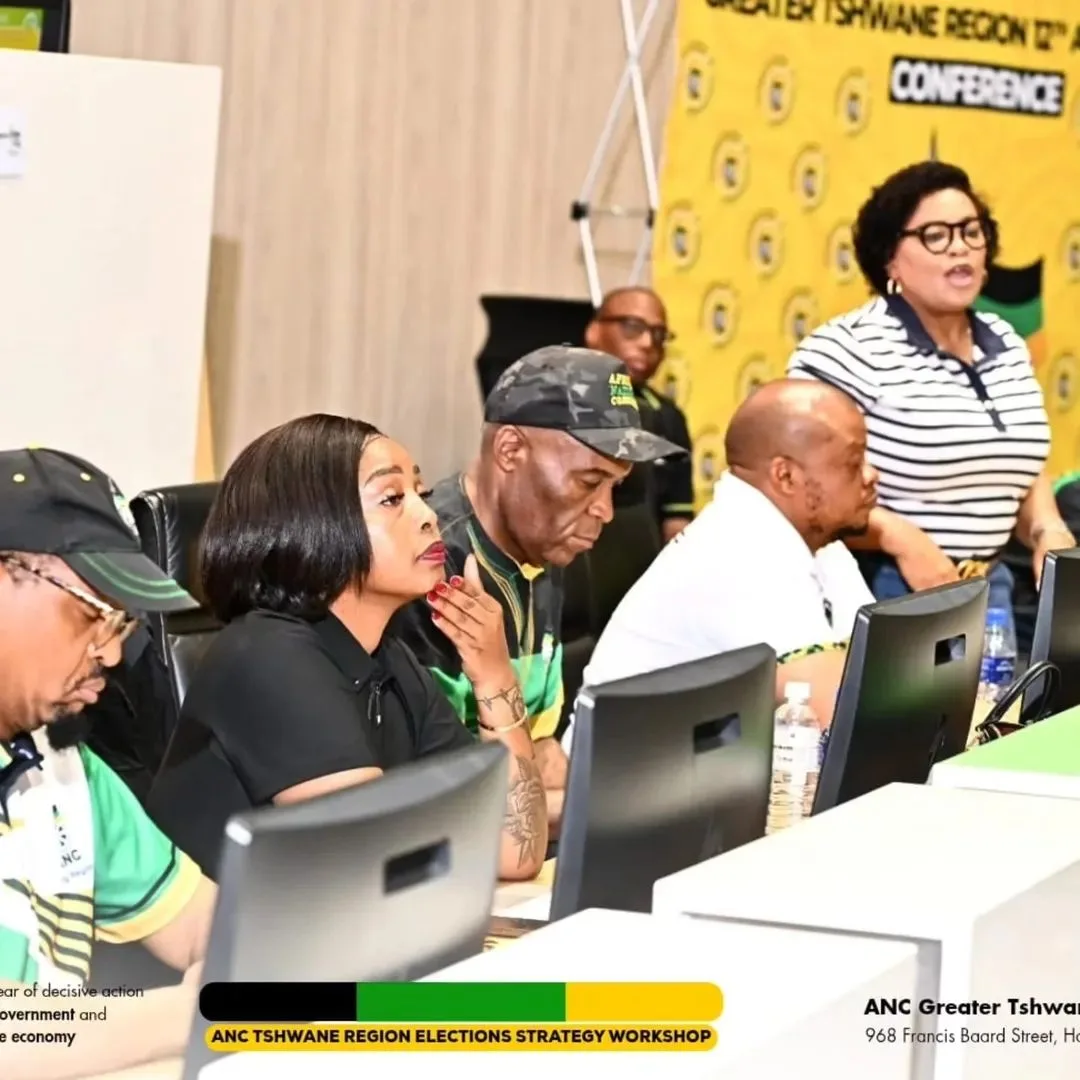
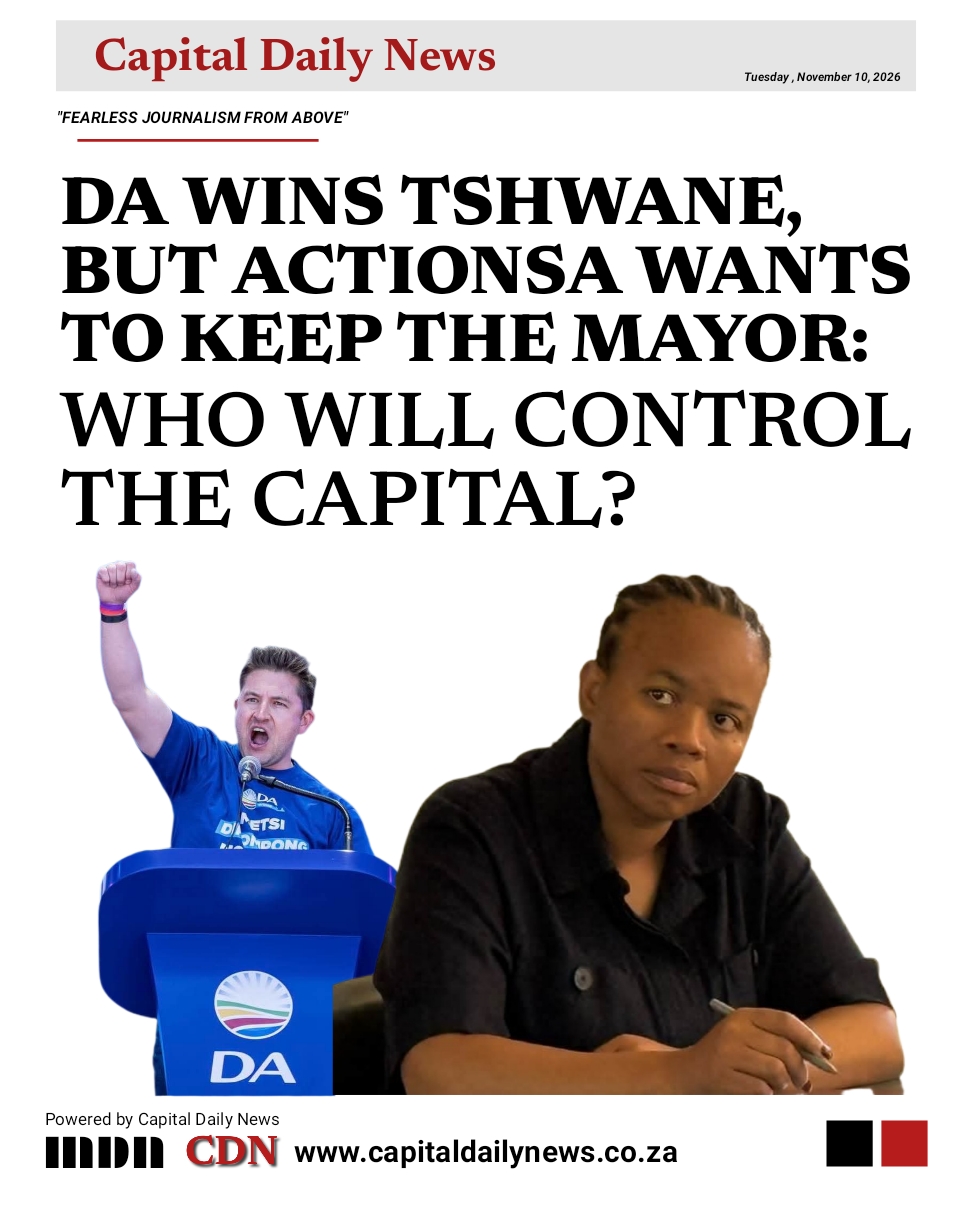
PRETORIA — The Democratic Alliance (DA) may have won the biggest share of political representation in the City of Tshwane, but winning an election and securing the authority to govern are two different things.
Following the declaration of the 2026 Local Government Election results, Tshwane has officially become a hung council, with no political party securing the 108 seats required for an outright majority in the 214-seat municipal council.
The DA secured 74 seats, followed by ActionSA with 48 and the African National Congress (ANC) with 44.
The Freedom Front Plus (FF Plus) obtained 17 seats, the Economic Freedom Fighters (EFF) secured 13, while the remaining seats went to smaller political parties.
The outcome has created a political situation in which the party that finished first cannot govern without negotiating support from other parties.
And that is where ActionSA enters the picture.
ACTIONSA'S 48 SEATS COME WITH A POLITICAL CONDITION
ActionSA has emerged as one of the most influential players in Tshwane's coalition negotiations.
Party leader Herman Mashaba has made it clear that any coalition arrangement involving ActionSA must retain Dr Nasiphi Moya as executive mayor.
The party argues that Moya needs continuity to complete the work of stabilising the municipality and improving service delivery.
ActionSA national chairperson Michael Beaumont has similarly indicated that securing another five-year term for Moya is central to the party's negotiating position.
This is not an insignificant demand.
ActionSA has 48 seats. Combined with the DA's 74, the two parties would command 122 seats, comfortably above the 108-seat majority threshold.
However, the question is whether the DA is prepared to support an ActionSA mayor despite having secured the largest number of seats.
The DA's electoral victory does not automatically entitle it to the mayoralty, but it gives the party a strong negotiating position.
THE DA'S DILEMMA: GOVERN WITH ACTIONSA OR LOOK ELSEWHERE?
The DA faces a political choice.
It can negotiate with ActionSA and potentially establish a two-party majority government, or explore alternative arrangements involving the ANC and other parties.
A DA-ANC arrangement would produce 118 seats, also enough for a majority.
But such an agreement would carry considerable political consequences for both parties, particularly given their national political differences and competition for voters.
The DA would also have to consider whether surrendering the mayoralty to ActionSA is politically acceptable after emerging as Tshwane's largest party.
For ActionSA, the calculation is equally important.
Its demand to retain Moya could secure continuity in the mayor's office, but negotiations could become complicated if the DA refuses to accept that condition.
MASHABA'S RELATIONSHIP WITH ZILLE ADDS ANOTHER COMPLICATION
Coalition negotiations are not taking place in a political vacuum.
The relationship between Mashaba and DA federal council chairperson Helen Zille has become another obstacle to a possible agreement.
Mashaba has publicly expressed his unwillingness to participate in coalition negotiations involving Zille.
He has also made strong remarks about DA mayoral candidate Cilliers Brink, whom he does not want returned to the mayoral office.
This raises an important question: can two political parties with enough seats to form a comfortable majority overcome disagreements between their senior leaders?
The residents of Tshwane should not have to bear the consequences of personal and political disputes between party leaders.
Coalition negotiations should be guided by a credible programme of government, measurable service-delivery commitments and accountability mechanisms.
THE ANC IS NOT OUT OF THE EQUATION
Despite finishing third, the ANC remains an important player.
Its 44 seats mean that it cannot be ignored in the formation of a new administration.
An ANC-ActionSA arrangement would produce 92 seats, leaving the parties 16 short of a majority.
However, adding the EFF's 13 seats and MK Party's four seats would take the combination to 109.
That is a mathematically viable majority, although no such agreement has been confirmed.
The ANC could therefore still influence the political direction of Tshwane, either through direct participation in government or by supporting an alternative arrangement.
The party is expected to announce its broader coalition position on 13 November, according to current media reporting.
THE BIGGER QUESTION: WHAT DO RESIDENTS GET OUT OF THESE NEGOTIATIONS?
While political parties negotiate mayoral positions and executive portfolios, Tshwane residents are waiting for something more fundamental: a government that works.
The municipality continues to face serious service-delivery challenges, including water interruptions, infrastructure maintenance, electricity concerns, road conditions and financial pressures.
The next administration will inherit these responsibilities regardless of which party occupies the mayor's office.
A coalition agreement should therefore go beyond distributing political positions.
Residents should expect clearly defined targets, public progress reports, transparent procurement, financial accountability and consequences when political commitments are not fulfilled.
The danger is that negotiations become focused on who gets which position rather than what the incoming administration intends to achieve.
Tshwane has experienced years of coalition instability and changes in political leadership.
Another administration that collapses because of disagreements between coalition partners would represent another setback for residents.
SO, WHO WILL GOVERN TSHWANE?
At this stage, the answer remains unknown.
The DA has the largest representation, ActionSA holds considerable negotiating power, and the ANC retains enough seats to influence alternative coalition arrangements.
The arithmetic is clear:
- DA and ActionSA: 122 seats. - DA and ANC: 118 seats. - ANC, ActionSA, EFF and MK Party: 109 seats.
All three combinations could theoretically produce a majority.
But none should be presented as an established governing arrangement without confirmation from the parties involved.
The election has determined the composition of the council. The forthcoming council proceedings and coalition negotiations will determine who occupies the mayor's office.
Tshwane has a hung council. The DA has won the numbers, but ActionSA wants to retain the mayor. Whether the two parties can reach an agreement may determine who governs South Africa's administrative capital for the next five years.
CAPITAL DAILY NEWS | POLITICAL ANALYSIS