The City of Tshwane's latest water supply update paints a mixed picture of the metropolitan area's water situation, with some reservoirs showing signs of recovery while others remain critically depleted.
In an update issued on Sunday, 15 November 2026, the City's Communication, Marketing and Events Department reported that water supply across most of Regions 1 to 6 remained relatively steady. However, declining reservoir levels, reduced inflows, high consumption and operational constraints continue to place several supply systems under pressure.
For communities in Mabopane, Winterveldt and Soshanguve, the figures are particularly concerning.
MABOPANE: MAIN RESERVOIR RECOVERS, BUT ANOTHER DROPS TO 9%
One of the most concerning developments is the contrasting performance of the two Mabopane reservoir systems.
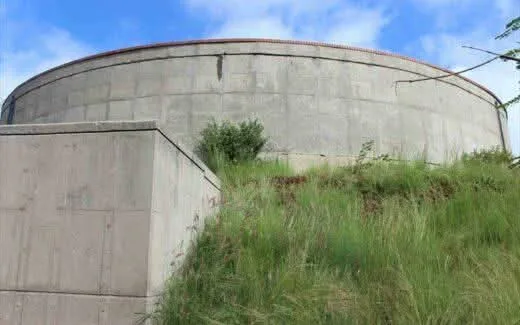
According to the City, Mabopane Main Reservoir has recovered to 61%, while the separate Mabopane Reservoir has dropped to just 9%, placing it in the critically low category.
The City says overnight supply restrictions to downstream reservoirs are being implemented to rebuild reserves and balance the system.
However, these restrictions could result in reduced water pressure in several communities.
The affected areas include:
- Parts of Ward 12 in Mabopane and Winterveldt, including Block A. - Klippan South and Extension 3 in Ward 9, Winterveldt. - Slovo and Extension 3 in Ward 19, Winterveldt. - Klippan North, Five Morgen and Paving in Ward 24, Winterveldt. - Blocks V, R and UX in Ward 22, Mabopane.
The Ga-Rankuwa East reservoir system has improved to 46% compared with the same time the previous day.
However, the situation in neighbouring Soshanguve remains under considerable pressure.
SOSHANGUVE: PUMPING SUSPENDED AS RESERVOIR LEVELS DECLINE
The Soshanguve L reservoir system is at 20% and continues to decline, with the City reporting no improvement in inflows.
Pumping to the Soshanguve L Tower, which is currently empty, remains suspended until reservoir levels recover above 35%.
The City warns that parts of Blocks UU, VV and WW, together with high-lying areas of Block L, may experience low water pressure.
The Soshanguve DD system is also under pressure, with reservoir levels at 28% and continuing to fall.
The City attributes the pressure on both systems to limited inflows.
HAMMANSKRAAL AND REGION 2: SERIOUS INFRASTRUCTURE AND SUPPLY CONSTRAINTS
The situation in Region 2 highlights further vulnerabilities in the metro's water supply network.
The two Babelegi reservoirs, supplied by the Klipdrift Package Plant, are at 26% and 21%, respectively, with both levels declining.
Although pumping to the Babelegi Tower continues, the tower itself remains critically low at 1%.
The Temba Water Treatment Plant also remains offline.
The City's update lists the following reservoir levels:
- Region 1: 31%. - Region 2: 42%. - Region 3: 61%. - Region 4: 44%. - Region 5: Empty.
The Unit D Tower remains critically low at 1%, despite continued pumping.
The Sekampaneng reservoirs are empty, while Hammanskraal North, also known as Renstown Reservoir, is at just 6%.
These figures highlight the pressure facing water infrastructure in parts of Hammanskraal and surrounding communities.
GARSFONTEIN RESERVOIRS DROP TO 2%
Region 6 is also experiencing serious pressure.
The City reports that Garstfontein reservoirs have dropped to a critically low 2% following the closure of their incoming supply the previous night.
The closure was intended to help stabilise upstream systems.
Derdepoort Reservoir, meanwhile, has improved to 37% and continues to recover.
In Mamelodi, the supply system is described as relatively stable, with Reservoir 2 at 67%, Reservoir 3 at 35% and Reservoir 4 at 42%.
However, residents in Mamelodi Extension 6 and Lusaka may experience low water pressure and supply interruptions during peak demand.
OTHER AREAS: MIXED RECOVERY AND OPERATIONAL CHALLENGES
Not all areas are experiencing the same level of pressure.
In Region 3, the two Klapperkop receiving reservoirs have improved to 40% and 52%.
The Carina Street reservoirs are at 53%, 41% and 43%, while the Heights LL system has recovered to 38%.
In Region 4, the City reports stable water supply, with no immediate concerns.
Region 5 is generally stable, with Refilwe Reservoir at 60%.
However, Rayton Tower is empty following a power outage that affected pumping into the tower. The City says the tower is recovering, but the system remains vulnerable.
Montana Reservoir has dropped to 58%, while the Roodeplaat Water Treatment Plant is producing 36 million litres daily, all directed to Montana Reservoir.
The City says this arrangement also helps ease demand on the Garstfontein supply system.
Magalieskruin Reservoir dropped to 15% overnight but is reportedly recovering.
THE BIGGER QUESTION: HOW SUSTAINABLE IS TSHWANE'S WATER SUPPLY?
The latest figures demonstrate that water availability across Tshwane is uneven.
While some reservoirs are recovering, others are operating at critically low levels, with some towers empty and certain treatment and pumping operations affected.
The City has identified several contributing factors, including reduced inflows, continued high consumption, hot weather, power outages and supply management interventions.
However, the immediate concern for affected communities is not simply the percentage recorded at a reservoir, but whether sufficient water can consistently reach households.
The distinction is important: a reservoir recovering to 61% does not automatically mean that every household supplied by that system has reliable water, just as a low reservoir reading does not establish that every connected household is without water.
For residents in Mabopane, Winterveldt, Soshanguve and Hammanskraal, the situation warrants close monitoring and clear communication from the municipality.
The City needs to keep residents informed about the duration of supply restrictions, the recovery of depleted reservoirs, the operational status of treatment plants and the measures being implemented to restore normal supply.Capital Daily News will continue monitoring the City's water supply updates, particularly developments affecting communities in Region 1 and the wider Tshwane metropolitan area.