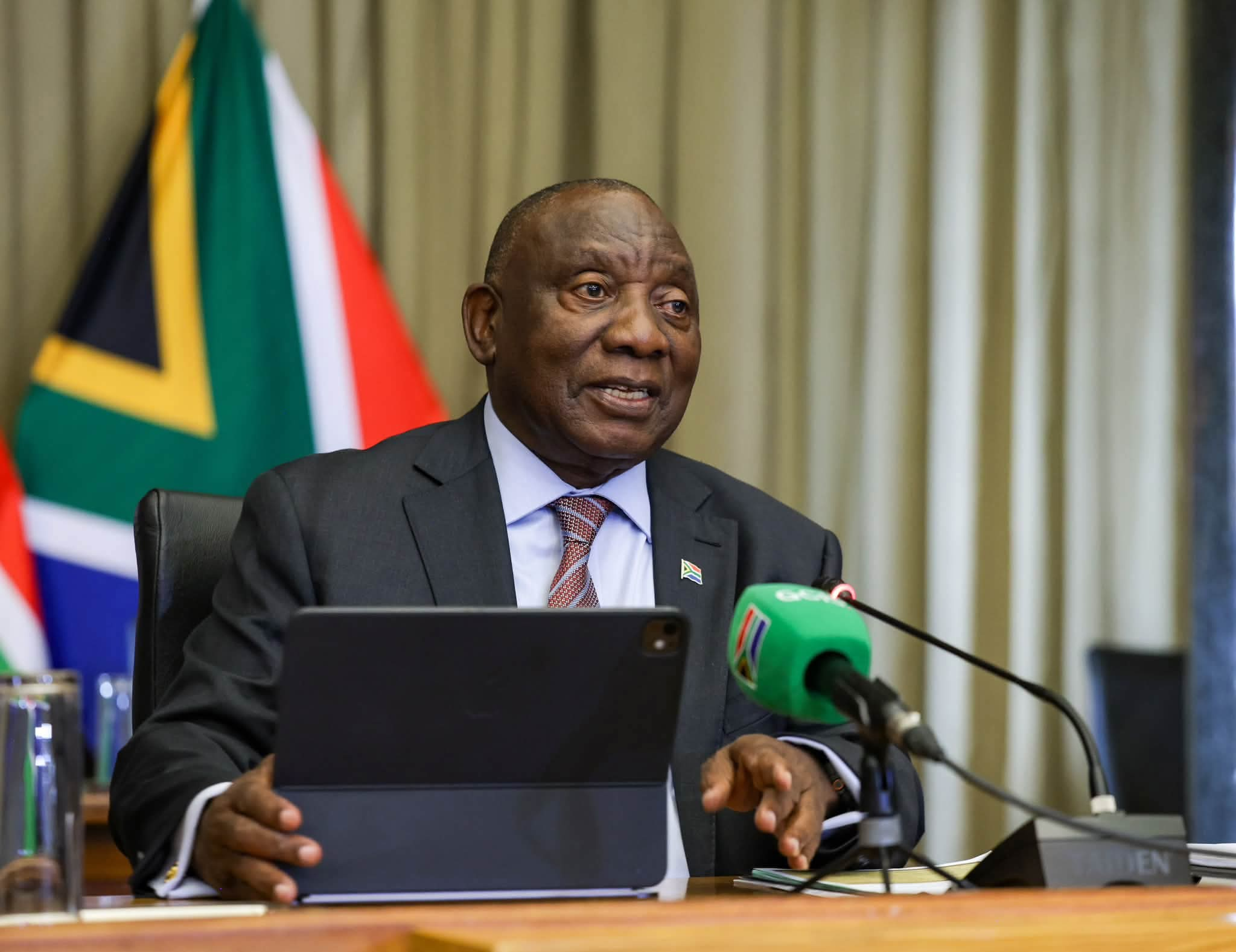
The engagement at the Union Buildings in Pretoria, held on 10 November 2026, focused on mobilising the country's academic and scientific institutions to support economic growth, strengthen public-sector capacity and address the skills requirements of a developing economy.
The central question, however, extends beyond bringing institutions together: how will this collaboration translate into measurable improvements in education, employment, research, innovation and economic opportunity?
Universities expected to contribute beyond academic qualifications
In his opening remarks, Ramaphosa argued that universities and public research institutions must play a more direct role in addressing South Africa's economic and social challenges.
He pointed to the country's unemployment rate of 33.7%, saying the economy was not growing fast enough to absorb the millions of people seeking employment. He also highlighted the difficulties facing young jobseekers.
The President said universities, TVET colleges and Sector Education and Training Authorities (SETAs) should operate as a more integrated system, allowing young people to move from education into practical workplace experience without falling through institutional gaps.
Research investment remains a concern
One of the significant issues raised during the engagement was South Africa's investment in research and development.
According to Ramaphosa, the country spends approximately 0.6% of its Gross Domestic Product (GDP) on research and development, compared with the government's 2030 target of 1.5%.He argued that both public and private investment must increase if South Africa is to develop its scientific capabilities and compete in emerging industries.
The President identified several areas requiring stronger university-government collaboration:
Artificial intelligence: Developing South Africa's own capabilities to build, govern and use AI technologies.
Energy security: Supporting research and skills development for the country's energy transition.
Water security: Using scientific expertise to help municipalities improve water supply and infrastructure.
Industrialisation: Processing critical minerals locally to create economic value and employment.
Public administration: Using university expertise to strengthen government planning and evidence-based policymaking.
The bigger question: From policy commitments to measurable delivery
The engagement takes place against the backdrop of South Africa's existing development frameworks, including the National Development Plan (NDP) 2030, the National Plan for Post-School Education and Training (NPPSET) 2021–2030 and the Medium-Term Development Plan (MTDP) 2024–2029.
These frameworks provide the policy foundation for addressing unemployment, inequality, skills shortages and economic development.
However, the country's challenge has never been limited to the absence of development plans. Implementation, institutional coordination, funding and accountability remain central to whether policy objectives translate into meaningful improvements in people's lives.
Ramaphosa said the meeting was intended to establish concrete commitments that would better structure cooperation between government, universities and national science councils.
The Presidency's published opening remarks describe the engagement as the beginning of this process. They do not, on their own, establish which specific agreements, funding commitments or implementation deadlines were ultimately adopted.
For millions of unemployed young South Africans, the real test will be whether these discussions translate into accessible training opportunities, practical workplace experience, research opportunities and sustainable employment.
South Africa needs more than an educated population. It needs an economy capable of using the knowledge, skills and innovation that its education system produces.